15 Things You Can Do in Racing Games That Most Players Never Try
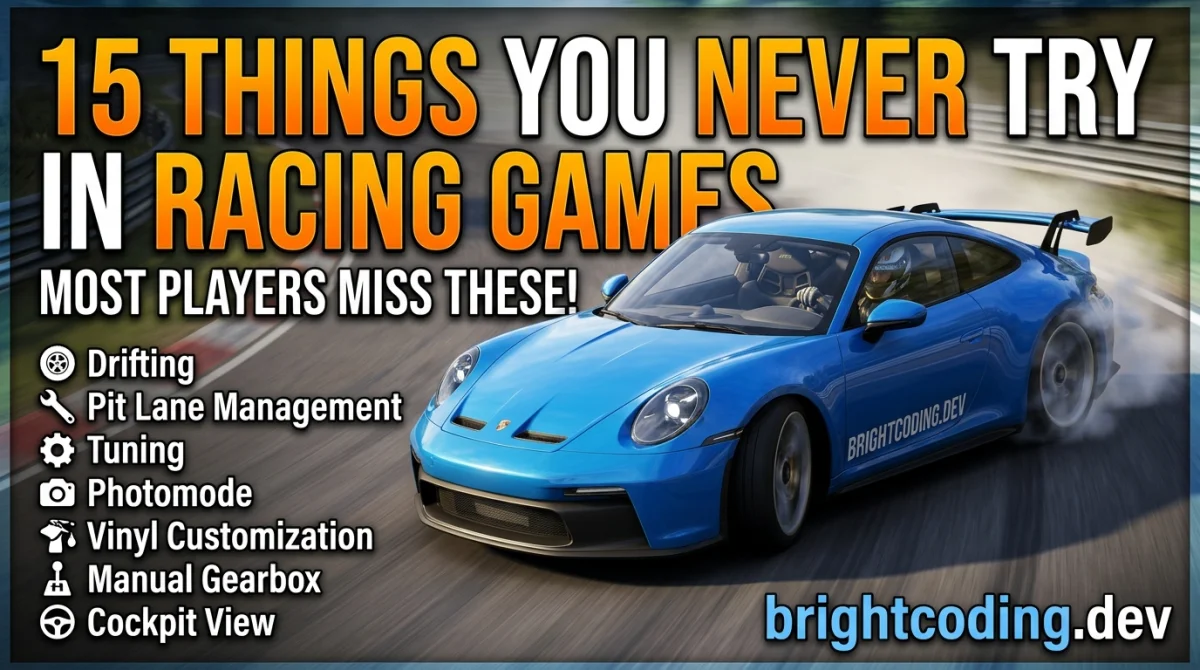
15 Things You Can Do in Racing Games That Most Players Never Try
I lost a race last Tuesday because I stopped to look at a fence.
Not a crash. Not a bad corner. I was halfway through a rally stage in a game I'd already finished twice, and I noticed the fence posts had frost on them. I eased off the throttle, turned the camera, and watched my split time die in the corner of the screen. Finished fourth.
Then I restarted the stage and did it again, because I wanted to see how the light hit the ice at a different time of day.
That's the thing about racing games nobody tells you: the racing is only one of the things you can do in them. Most of us buy a car game, drive fast, finish the career, and move on. I did that for years. Then I started poking at the edges, and it turned out there was a whole second hobby hiding inside the first one.
The backstory
I'm not a sim-racing purist. I play on a controller, mostly on PC and a bit on PlayStation, and my wheel is a mid-range one I bought used. I've put maybe a few hundred hours into racing games over the last few years, which is nothing next to the people who do league racing, but enough to have opinions.
What changed for me was getting bored of winning. Once the career mode stops being hard, you either quit or you invent new reasons to play. I chose the second option, and I've been pleasantly surprised by how much is still in there.
Here are fifteen things I actually do now. Some are big, some are tiny, all of them are things I never touched in my first hundred hours.
The stuff I wish someone had told me sooner
Slow down and look around
This is the one that started it for me. Most racing games put an enormous amount of work into the world outside the track, and almost nobody looks at it.
Set a time trial, pick a slow car, and just drive the circuit at maybe sixty percent. You'll find shortcuts that the AI never uses, roadside details that reference other games, and lighting that only works at certain hours. In some titles you can change the time of day before a run, and doing that one thing changed how I felt about a track I'd driven a thousand times.
The trade-off is obvious: you're not racing. Your lap times will be awful. But you'll come back to the fast laps with a better mental map, and that's worth something.
Turn the HUD off
I did this on a whim and it was genuinely uncomfortable for the first hour. No speedometer, no minimap, no ideal line. I had to learn the track with my ears and my hands.
Then something clicked. I started braking by sound, shifting by feel, and my inputs got smoother because I wasn't watching a number climb. It's not faster. It's more absorbing. If you've never done it, try one short track, three laps, and see how it feels. You can always turn it back on.
Race the ghost, not the leaderboard
Most games hand you a ghost of your best lap. I used to ignore it. Now I spend whole evenings just trying to beat my own ghost by a tenth, one sector at a time.
It's a completely different kind of play. You're not trying to win, you're trying to find a single corner where you can gain a fraction of a second. That's a puzzle, not a race, and it's weirdly relaxing. If you like this kind of self-improvement loop, the competitive side of the rank-up competitive guides hub covers the same mindset even for games that aren't about cars.
Learn one car properly
I used to treat cars as a collectible checklist. Buy, drive once, forget. Then I spent two weeks in a single slow hatchback, no upgrades, just tuning tyre pressures and learning how it moved.
By the end I could feel the front end losing grip before it actually did. That feel transferred to everything else I drove afterward. One car, learned properly, teaches you more than thirty cars driven badly.
Tune something, then break it
Tuning menus scared me for a long time. Too many sliders, too many numbers. My advice: change one thing at a time and go drive. Lower the rear tyre pressure. Take a lap. Feel what happened.
You will make the car worse. That's the point. Making it worse on purpose teaches you what each setting does faster than any tutorial, and you'll eventually know exactly which slider to reach for when a track punishes you.
The weird things that turned into habits
Drive the wrong way, carefully
Not literally into traffic. I mean take a car that doesn't belong on a track and drive it around one anyway. A van. A classic saloon. Something slow and heavy.
It's not competitive, and the AI will lap you if you let them. But driving a bad car fast is a skill, and it makes a good car feel incredible when you go back to it. I do this when I'm tired and don't want the pressure of a proper race.
Do endurance runs with a podcast on
A long race, a slow car, a podcast in my ears. That's my Sunday evening now. It sounds boring and sometimes it is, but there's a rhythm to it that I don't get from short races.
Start with something modest, maybe twenty or thirty minutes, and see if the rhythm grabs you. Don't jump straight into a four-hour event unless you know you enjoy the format.
Chase the weird achievements
Racing games hide some genuinely funny challenges in their achievement lists. Drive a certain distance in reverse. Win a race with a specific car. Finish a lap with no assists.
I ignored these for years and now they're half the reason I boot the game. If hunting for hidden objectives is your thing, the cheat codes and easter eggs hub is a good place to lose an afternoon.
Build a photo album
Every modern racing game has a photo mode, and almost nobody uses it. I started taking one screenshot per session, just a quick one, and now I have a folder of a few hundred images that's basically a diary of where I've been.
The lighting is usually the hard part. Morning and evening give you the best shadows, and rain makes everything look better than it should. Give it ten minutes.
The side of racing games that isn't racing
Watch the replay like a coach
After a messy race, watch your own replay from a chase camera. You'll spot the exact corner where you keep losing time, and it's usually not the corner you thought.
I do this maybe once a week and it has done more for my pace than any setup guide. It's also just fun to watch your own mistakes in slow motion.
Set up a proper short session
I used to play for two hours and feel like I'd done nothing. Now I do thirty-minute sessions: five minutes of warm-up laps, one time trial, one short race. Done.
Having a fixed shape to the session keeps me focused, and it means I actually finish things. If you want to build a habit around games in general without it eating your evenings, the free gaming tools page has a few timers and trackers that help.
Play something completely different between sessions
I burn out on racing games fast if I only play racing games. Between long stints I'll play a browser game for ten minutes, something with no setup and no load time, just to reset my head.
The free browser-games hub is where I go for that, and there's a daily challenge that gives me a small goal without a two-hour commitment. It sounds unrelated, but it keeps my racing sessions fresh.
Read the patch notes
Boring, I know. But racing games get balance updates that quietly change how cars behave, and the community notices before you do. Skimming patch notes and the odd bit of gaming news and trends has saved me from blaming myself for a car that was actually nerfed.
Race without assists, on one track
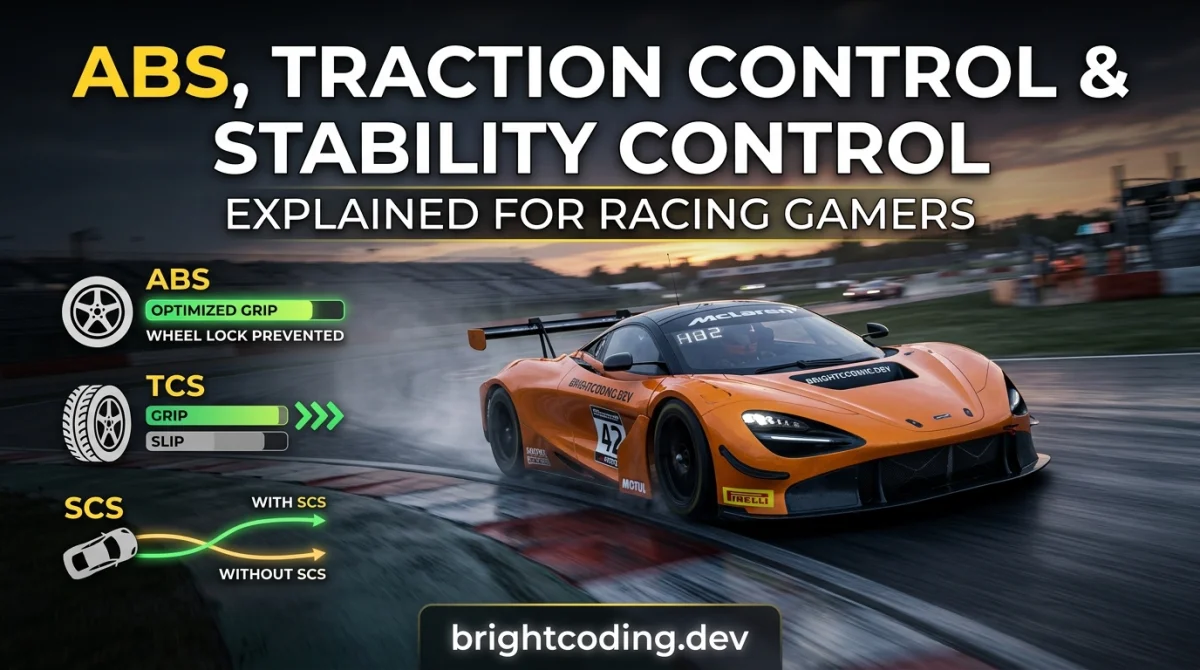
Turn off traction control and the racing line on a single circuit you know well. Just that one. Keep everything else on.
It'll be a mess for a few laps. Then it won't be. Doing this on one track at a time is far less frustrating than flipping every switch at once, and you'll feel the car do things you didn't know it could.
Honest pros and cons
What this way of playing has given me:
- I've got far more hours out of games I thought I was finished with, without buying anything new
- I'm a genuinely better driver now, mostly from the replay-watching and the single-car practice
- Racing games have become a wind-down activity instead of a stress source
What it costs:
- It is slower. You will not climb leaderboards doing most of this
- Some of it is outright boring if you're in the mood for competition
- Watching replays and fiddling with tuning can eat a whole evening with nothing to show for it
I don't do all fifteen things every week. Some of them are once-a-month mood things. The point isn't a checklist, it's knowing they're there when the usual loop gets stale.
What I learned
- Most of the content in a racing game is in the parts you skip. The scenery, the replays, the tuning menus. It's there whether you look or not.
- One car learned properly beats ten cars collected. Depth is cheaper than breadth.
- Turning off the HUD taught me more about my own driving than any tutorial ever did.
- A short, shaped session beats a long, aimless one every time for me.
- Racing games make good background noise, and that's not an insult. Sometimes I want to be busy, not challenged.
Quick practical tips
- Try the no-HUD run on a short circuit first. Three laps is enough to know if you like it.
- Change one tuning setting at a time, then do two laps before judging it.
- Take a photo in every new location. It takes ten seconds and builds a nice record.
- Warm up before a time trial. My first lap is always my worst.
- Keep sessions short. Thirty focused minutes beats two distracted hours.
FAQ
Do I need a wheel for any of this? No. I do most of it on a controller. A wheel makes the no-assists driving more fun, but it's not required for anything on this list.
Which of these should I try first? The no-HUD run or the slow sightseeing lap. Both are free, take ten minutes, and tell you quickly whether this side of racing games appeals to you.
How long before I notice a difference in my driving? For me, the replay-watching and single-car practice took a few weeks of short sessions before I felt a real change. Your mileage will vary, and it depends how often you play.
Is any of this worth it if I only play casually? Yes, and maybe more so. These are low-pressure ways to play that don't require you to be fast. I'd argue they suit casual players better than the career grind does.
I still race to win most nights. But the fence with the frost on it is the thing I remember from that week, and I'll be back to look at it again before long.
Ready to play?
Puzzle, arcade, 3D, word & sports games for every age — instant play, no registration.
Comments
No comments yet. Be the first to share your thoughts!