10 Hidden Shortcuts and Tricks in Open-World Car Games
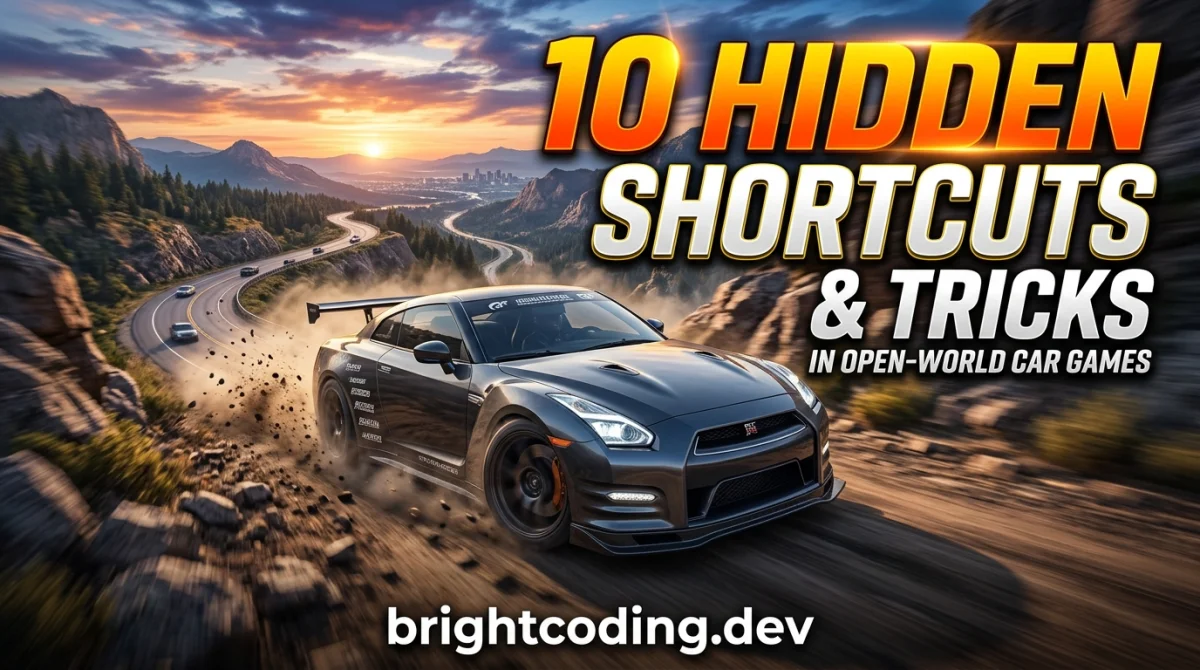
10 Hidden Shortcuts and Tricks in Open-World Car Games
You know the feeling. You have been driving the same route for twenty minutes, the checkpoint is right there, and some player in a stock-looking car blows past you on a road that does not appear on the minimap. Open-world racing rewards a specific kind of impatience, and most of us are too busy holding the throttle to notice.
This article is about the stuff that actually saves you time: the shortcuts, the map-reading habits, and the small tricks that separate a clean run from a frustrating one. Fewer wasted laps, fewer rage quits.
Why most people get this wrong
Open-world car games are not tracks. They are maps with roads painted on them, and the roads are a suggestion. The problem is that most of us learn to race on closed circuits, where going off the line means grass and a wall. So we treat every open-world road as the only legal route.
Then there is the map. We glance at the minimap for the next turn and never zoom out. The big picture is where the shortcuts live, and nobody looks at it mid-race.
And finally, pride. When a shortcut fails, we keep taking it. That one dirt path was bad in the rain with a rear-wheel-drive car, so naturally we try it again with the same car next lap. Insanity, but with a handbrake.
1 - Treating the map like a track
You are chasing a rival through a city, and there is a straight line between you and the checkpoint. Except it goes through a park, a fence, and someone's front garden.
People do this because the GPS line is drawn for them and they trust it blindly. The consequence is a written-off car and a thirty-second recovery. Before you commit, look at what the line crosses: green means grass, and grass means grip loss in most games. If the route cuts a corner through dirt, either slow down or skip it.
2 - Ignoring the elevation and terrain type
A hill looks like a shortcut until your car is airborne and facing a tree. Open-world maps hide elevation in the flat colours of a minimap.
This catches people out because they plan the route at speed, not at the start line. The fix is simple: when you first learn a map, drive the shortcut once at a sane pace. If the car bottoms out or the surface flips to gravel, mark it as a "slow shortcut" and only use it when you have a clear lead. Our tips, tricks and guides hub has more on reading terrain in specific games.
3 - Never scouting a route before a race
You would not enter a real race without a sighting lap, but in games we hit "restart" and go. Then we discover the bridge is out.
People skip scouting because it feels like wasted time. The consequence is losing three attempts to the same blind crest. Spend two minutes in free roam before a race weekend in any open-world driving game. Drive the route slowly, note the fast corners, and remember which shortcut actually works. That is not practice. That is preparation.
4 - Cutting corners too aggressively
The classic. You see a corner, you cut inside, and you clip the barrier or a lamp post that was invisible a second ago.
It happens because corner-cutting feels free. It is not. Street furniture in open-world games is often solid, and hitting a lamp post at speed costs you more than the corner ever saved. Aim to clip the apex, not the pavement. If the game has a rewind or reset feature, use it after a bad cut, not as your main strategy.
5 - Forgetting that traffic and pedestrians exist
A shortcut through city streets only works if the streets are empty. At the wrong time of day, they are not.
New players forget that open-world traffic is part of the challenge, not scenery. The result is a head-on collision with a bus that was minding its own business. Learn the traffic patterns on your regular routes, and prefer shortcuts that run through alleys, service roads, or off-road sections where the game does not spawn civilian cars. It also helps to check whether the game has a "no traffic" free-roam setting for scouting.
6 - Upgrading power before grip
You buy the biggest engine, then wonder why the car cannot take a corner.
This is the most common tuning mistake in open-world racers. More power feels like progress, but on twisty maps it just means you arrive at the barrier faster. Spend your first upgrades on tyres, suspension, and brakes. Then add power once the car stops scaring you. If you want a deeper look at how different driving games handle handling models, the game genres explained hub breaks down the differences.
7 - Using the wrong car for the map
A hypercar is not the answer to a map full of gravel, and a rally build is miserable on a motorway.
People stick with one favourite car because it is fast on paper, then lose to a slower car that suits the terrain. Check the surface mix of the map before you pick. If the route is mostly dirt, bring something with ride height and grip. If it is all tarmac, sacrifice a little top speed for handling.
8 - Missing the fast travel and free-roam tricks
Most open-world car games hide a fast-travel system, a garage delivery option, or a way to spawn your car nearby. Players grind across the map because they never opened the right menu.
The consequence is hours spent commuting instead of racing. Read the pause menu and the map legend once. It is boring, and it is worth it. For games that lean heavily on collectibles and hidden routes, the cheat codes and easter eggs hub is a good place to find the oddities the tutorial never mentions.
9 - Not using the minimap zoom or route preview
The minimap is a tool, and most of us leave it on the default zoom forever.
That default is tuned for city driving, not for spotting the gap between two fences that saves you eight seconds. Zoom out before a race or a long delivery. You will see the shape of the corner and the alternative route at the same time. If the game supports a full-map route preview, use it during the countdown.
10 - Restarting instead of adapting
Your first attempt goes wrong, so you restart. And again. And again.
Restarting feels like a fresh start, but it teaches you nothing. Adapt instead: finish the run, note where you lost time, and change one thing next attempt. The gamers who get fast are the ones who review a bad lap instead of erasing it. If you want to sharpen that habit outside racing games, the free daily challenge is a low-stakes way to practise learning from mistakes.
Do this instead
- Scout the route once at a slow pace before you race it.
- Read the terrain and elevation, not just the GPS line.
- Upgrade grip before power.
- Match the car to the surface.
- Zoom out the minimap and check the full map before the start.
- Use fast travel and garage delivery instead of driving everywhere.
- Finish a bad run, then change one thing.
- Keep a short mental list of shortcuts that actually work.
FAQ
Are shortcuts in open-world car games always faster? No. A shortcut that saves distance can cost more time if the surface is slow or the entry is awkward. Test it once before you rely on it.
Should I always upgrade the engine first? Usually not. Tyres, suspension, and brakes give you more usable speed on twisty routes. Add power when the car feels stable.
How do I find hidden shortcuts? Look for gaps in barriers, service roads, and routes that cut a corner without crossing grass. The minimap zoom and full map preview are your best tools.
Why do I keep crashing on shortcuts? Often it is traffic, elevation, or a solid object you did not see. Slow down on the first attempt and learn where the hazards are.
Do these tricks work in every open-world car game? The principles do. Exact menus and features vary, so check the game's own map legend and settings.
The fastest players are not the ones with the best car. They are the ones who know the map, and you can start learning yours today.
Ready to play?
Puzzle, arcade, 3D, word & sports games for every age — instant play, no registration.
Comments
No comments yet. Be the first to share your thoughts!