10 Ways to Train Like a Professional Sim Racer
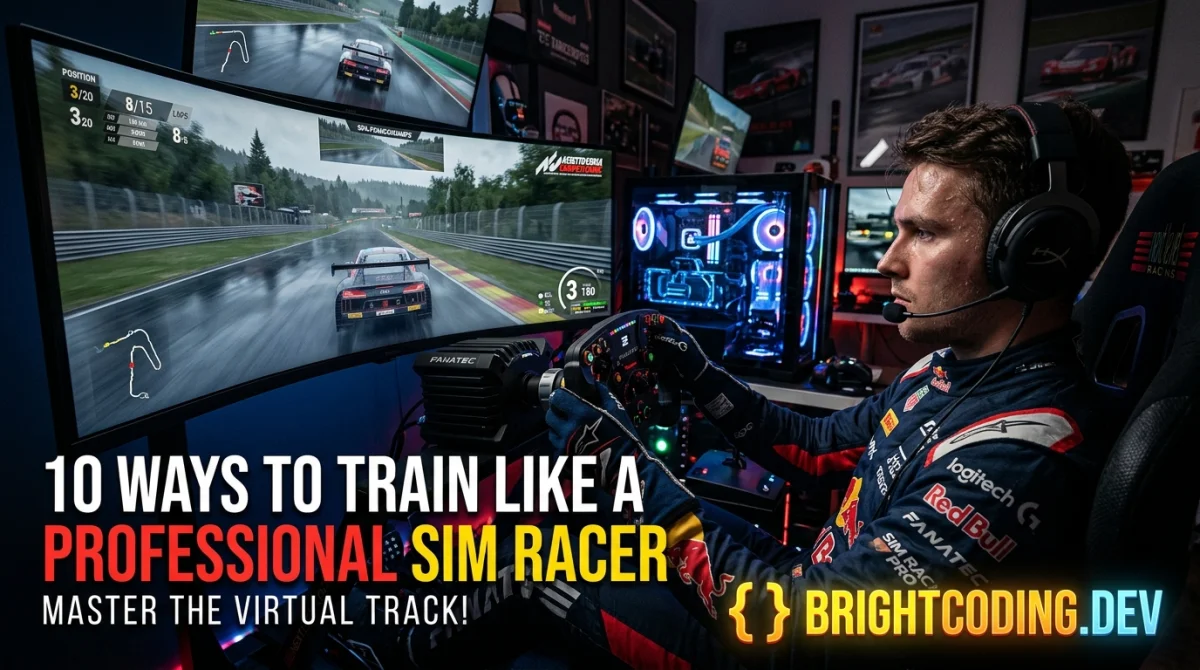
I spun at the second-to-last corner of a 25-minute race, the one where I'd been holding third for eleven laps. The back of the car stepped out under braking, I corrected too late, and the wall ate my front wing. I sat there with my hands still on the wheel, headphones buzzing, watching four cars slide past. That was the night I stopped treating sim racing like a game and started treating it like practice.
Here's what I actually changed, and what it cost me in time, sleep and a bit of pride.
The backstory
I'd been racing on and off for about two years, mostly quick 15-minute online sprints after work. I was fast in qualifying and a mess in races. I assumed I just needed a better wheel. Spoiler: I didn't. What I needed was a plan. So I built one, borrowed ideas from how real drivers talk about their own training, and tested it on myself over a few months. Some of it worked. Some of it was a waste of a Saturday.
Beat 1: Slow down before you speed up
The first thing I did was stop chasing lap times. I spent a full week doing nothing but consistent laps at maybe 90 percent pace, aiming to hit the same time within a tenth or two. It was boring. Genuinely, teeth-grindingly boring for the first two sessions.
Then something clicked. Without the pressure to be fast, I started feeling the car. Where it wanted to slide, where the tires gave up. It sounds like the sort of thing a coach says, but it's true: consistency first, speed second. Most of my race crashes came from driving at 100 percent of my ability for one lap and 105 percent the next.
Beat 2: The notebook that changed everything
I bought a cheap paper notebook. Not an app, not a spreadsheet. Paper, because I couldn't alt-tab away from it.
After each session I'd write three lines: where I lost time, what I tried, and how it felt. After a month I had a messy log of the same three corners ruining my races. That pattern was invisible until I wrote it down. If you want a starting point, this is the single highest-return thing I did, and it costs almost nothing.
I also started checking the rank-up competitive guides for structure. The mindset stuff there maps surprisingly well to racing, even though the games are different.
Beat 3: Practice like a race, not like hotlapping
Hotlapping is comfort food. It feels productive because the lap timer says nice things, but it doesn't teach you to race. So I split my time: maybe 60 percent structured practice, 40 percent actual races, and I started entering longer races where tire wear and fuel actually matter.
Longer races hurt. I made mistakes at minute 20 that I never made at minute 5. My arms got tired, my focus drifted, and I'd miss a braking point because I was thinking about dinner. That's the lesson. Race fitness is real, and you only build it by sitting in the seat for the full distance.
Difficulty-wise, I set the AI (or the online lobbies) slightly above where I was comfortable. Not so far that I got lapped, just enough that I had to work. Getting destroyed every race teaches you nothing except frustration.
Beat 4: The gear rabbit hole (and how far I went)
I'll be honest, I bought things. A load cell brake pedal made more difference than any wheel upgrade, because braking is where races are won. Expect around 100 to 200 for a decent entry-level load cell setup, though prices move and you should check current listings.
What I did not get much from: a fancy button box I barely touched, and a shaker setup that mostly made my desk rattle and my downstairs neighbor unhappy. Your mileage will vary. If you're on a controller, you can still train the fundamentals. It's just harder to feel the tires.
For downtime between sessions I'll sometimes drop into the free browser-games hub to keep my reflexes warm without the commitment of a full race. It's not the same as sim practice, but it keeps my hands busy on a slow Tuesday.
Honest pros & cons
What worked for me:
- Structured practice with a written log, because it exposed patterns I couldn't see in the moment.
- Prioritizing the brake pedal over everything else.
- Racing longer distances to build actual focus.
What didn't:
- Chasing lap times before I could run consistent laps.
- Buying gear to fix a driving problem (it never fixes a driving problem).
- Practicing tired. I learned bad habits and had to unlearn them.
What I learned
- Consistency beats a single fast lap. A driver who runs clean 1:32s every lap beats the one who runs one 1:30 and three off-track excursions.
- Write it down. Memory lies. The notebook doesn't.
- Race distance is its own skill. Focus fades, and you have to train it like a muscle.
- Upgrade the brake first. It's the least glamorous and most effective purchase.
- Take breaks. My best sessions came after a night off, not after a fifth hour in the seat.
Quick practical tips
- Do at least one session a week with no lap timer visible, focusing purely on feel.
- Log three lines after every session, no more.
- Enter one longer race a week even if you're not ready. You'll learn more from finishing than from winning.
- Check the tips, tricks and guides hub when you hit a wall; someone has usually solved your exact problem.
- Sleep. Seriously. A tired driver is a crash waiting to happen.
FAQ
Do I need expensive gear to train like a pro? No. A stable setup and a load cell brake get you most of the way. The rest is seat time and reflection.
How many hours a week is realistic? I did roughly 6 to 8 hours spread across the week, plus races. You can do less and still improve if the practice is structured.
Can controller players train the same way? Yes, though feeling the tires is harder. Lean more on the notebook and on watching replays.
How do I know if I'm actually improving? Track your consistency, not just your best lap. If your average lap gap to your best is shrinking, you're getting better.
The last word
I still spin sometimes. But now I know why, and I write it down before I forget. That's the whole trick, really: pay attention, then pay attention again. If you want more of this kind of thing between sessions, the GamingUp blog is where I keep my notes.
Ready to play?
Puzzle, arcade, 3D, word & sports games for every age — instant play, no registration.
Comments
No comments yet. Be the first to share your thoughts!