10 Multiplayer Racing Tricks That Give You a Competitive Advantage

You are losing races you should win. Not because your car is slow or your reflexes are bad, but because you are doing a dozen small things on autopilot that faster drivers turned into habits months ago. After reading this you will have ten concrete changes you can test in your next session, and most of them cost nothing but a few minutes of practice. Give it one evening, roughly two to three hours of racing, and you will feel the difference in your finishing positions.
What you need before you start
Nothing exotic. Here is the honest short list:
- A game you actually play regularly (assists and physics differ wildly between titles).
- A controller or wheel you are comfortable with, set up so you can reach the brake and throttle without thinking.
- A way to record your races, even a phone pointed at the screen, so you can review what went wrong.
- Fifteen minutes in a practice or time trial mode before you go online.
- Patience for the first few races while new habits feel clumsy.
The ten tricks, in order
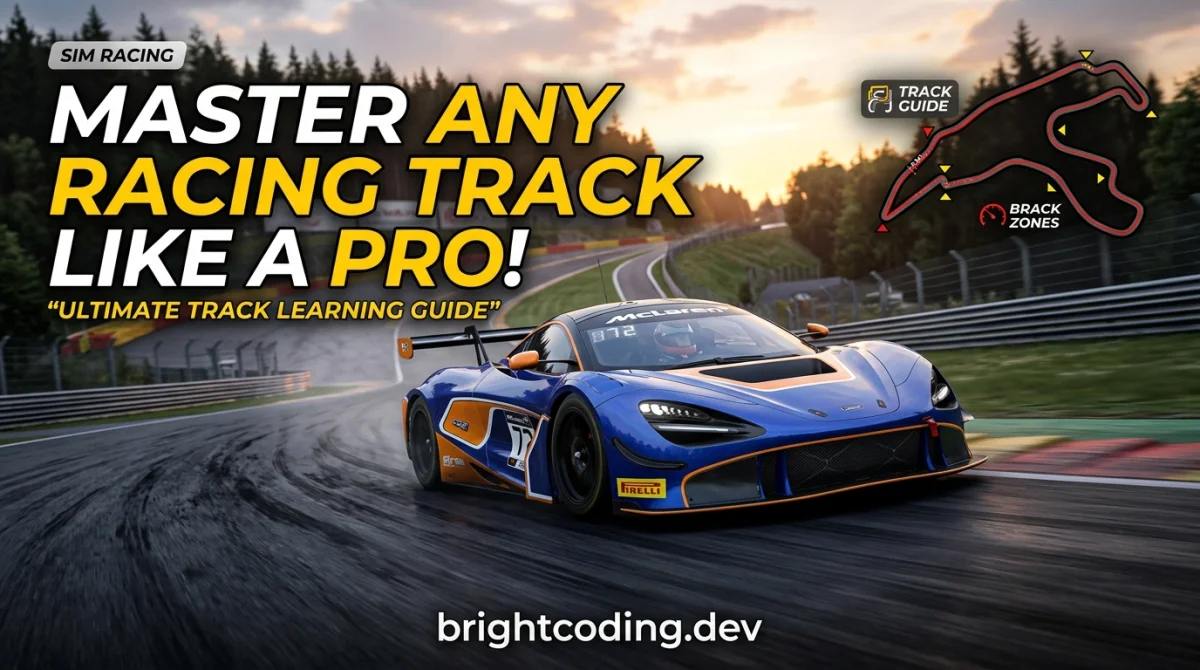
1. Learn one track properly before you race it online
Pick a single circuit and run twenty to thirty laps alone. Not to set a record, just to learn where the car actually wants to go. You are looking for braking points you can repeat, the kerbs that help and the ones that spit you into a wall, and the one corner where you keep losing time.
Why it matters: most online losses come from one or two corners where you brake too early or take the wrong line. Fix those and you gain positions without driving any harder.
Practical tip: pick a fixed landmark for each braking zone, a sign, a curb, a patch of tarmac. "Brake when the barrier ends" is repeatable. "Brake when it feels right" is not.
2. Brake in a straight line, then turn
Trail braking is a real skill and worth learning eventually, but the fastest easy win for most players is simpler: finish most of your braking before you turn the wheel. Braking and steering at the same time asks the front tires to do two jobs, and they usually do both badly.
Why it matters: clean, straight-line braking means you carry more speed into the corner and get on the throttle earlier on the way out. That is where overtakes actually happen.
Tip: if you keep running wide at the exit of a corner, you are almost certainly braking too late, not too early. Try braking a touch sooner and see if your exit speed improves.
3. Set your car up for consistency, not for one hero lap
A setup that sets a stunning qualifying time but snaps on you in lap three is a liability in a race. Aim for a car that behaves the same on lap one and lap ten. Slightly softer, slightly more forgiving, and you will finish higher.
Why it matters: in multiplayer you are racing other people, not the clock. A predictable car lets you defend and attack without binning it.
Tip: change one setting at a time and do five laps. If you change three things at once you will never know which one helped. If you are new to tuning, the game genres explained hub is a good place to understand how different racing subgenres treat car setup.
4. Practice your starts until they are boring
Race starts are chaos, and chaos is where positions are won. Spend ten minutes in practice launching from a standstill: find the throttle point that gets you moving without wheelspin, and learn your game's launch or clutch mechanic if it has one.
Why it matters: a good start can gain you two or three places before the first corner. A bad one can put you in the barrier before the lights go out.
Tip: in most games, a fraction less throttle beats a fraction too much. Wheelspin feels fast and is slow.
5. Drive the first lap at 90 percent
Everyone around you is cold, nervous, and overdriving. If you are the calm one, you will pick up places from other people's mistakes without taking any risks yourself.
Why it matters: the first lap accounts for a wildly disproportionate share of race-ending incidents. Survive it cleanly and you are already ahead of half the field.
Tip: leave a car's width when you can, brake a little earlier into the first corner, and let the aggressive drivers take each other out.
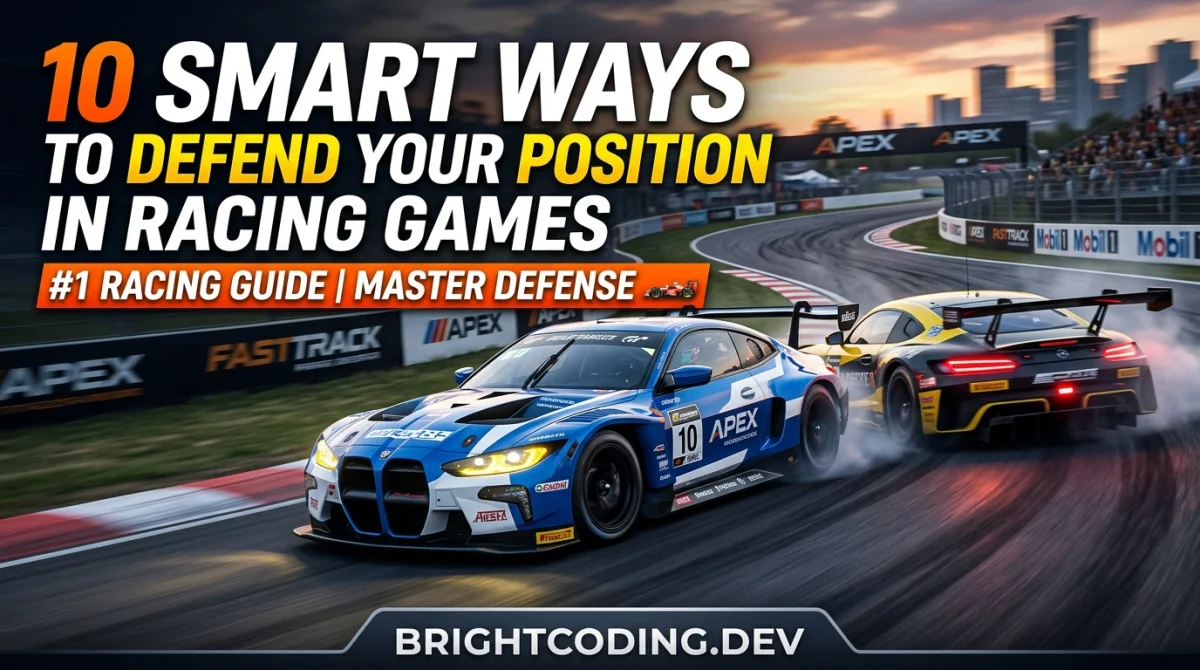
6. Learn to defend without weaving
Defending is a skill, and the good version is not "block everything." Pick your line into the corner, move across once, early, and make the attacker go the long way round. Weaving back and forth is how you get punted, and in many games it is against the rules anyway.
Why it matters: a well-defended position frustrates the driver behind into a mistake. A badly defended one ends with both of you in the gravel.
Tip: cover the inside line into a corner, not the whole straight. Give them the outside and make them work for it.
7. Use the slipstream deliberately, not accidentally
Drafting is free speed, but most players only notice it when it happens. Learn where the tow starts on your favourite circuit and time your run so you arrive at the braking zone alongside, not behind.
Why it matters: a well-timed slipstream pass looks like magic and costs you nothing but planning.
Tip: pull out of the slipstream slightly before the braking zone so you have a clean line and the other driver cannot just mirror you. If you are playing arcade-style racers, the effect is often exaggerated, so test how strong it is in a private lobby first.
8. Watch your own replays, especially the losses
Record a race, then watch it back once. You will spot the same mistake three times and it will annoy you into fixing it. This single habit separates players who plateau from players who keep climbing.
Why it matters: in the moment you feel fast. On replay you can see you braked five meters early every lap.
Tip: watch from the chase camera and the cockpit camera. They reveal different problems. If you want more structured ways to review and improve, the rank-up competitive guides cover this in depth across genres.
9. Warm up before you go online
Ten minutes of time trial before your first real race. Not to set a time, just to get your hands and eyes working together. Cold hands make sloppy inputs, and sloppy inputs make first-corner pileups.
Why it matters: your first online race of the session is usually your worst. A warm-up turns it into your second-best.
Tip: if you want a short, low-stakes warm-up, a quick run on the free browser-games hub works fine for getting your reflexes moving before you commit to a ranked session.
10. Pick one thing to improve per session
Trying to fix everything at once fixes nothing. Choose one item from this list, say braking points, and focus on it for the whole evening. Ignore the rest. Next session, pick another.
Why it matters: focused practice builds habits. Scattered practice builds frustration.
Tip: keep a short note on your phone. One line per session: what you worked on, what improved, what still hurts. It takes thirty seconds and it is shockingly effective.
Pro tips
- Race the people, not the clock. In multiplayer, a slightly slower but safer line that forces the car behind to go the long way round is often the winning move.
- Learn the track limits before you push. Many games penalize a wheel over the line, and a penalty on the last lap is a gut punch. Do a few laps deliberately wide in practice to see exactly where the limit is.
- Use the first lap to learn your rivals. Watch who brakes late and who is twitchy. By lap three you know who to attack and who to avoid.
- Reset your mindset after a bad race. One angry race turns into three. Take a five-minute break, then come back.
- Check your inputs. A worn controller stick or a pedal that is not reaching full travel will quietly cost you tenths every lap. Test it in the game's input display if there is one.
- Bookmark a daily routine. A short daily challenge, like the one on the GamingUp daily challenge page, keeps your hands sharp on days you cannot commit to a full race.
Common pitfalls
Braking too late, every time. It feels brave, it is slow, and it wrecks your exit. Fix: brake earlier than you think, then get on the throttle sooner. Your lap time will improve.
Copying a pro setup with no context. Their setup suits their driving style and their input device, not yours. Fix: use it as a starting point, then adjust one thing at a time until the car feels predictable.
Ignoring tire and fuel management in games that model them. If your game simulates wear, a race is a strategy game. Fix: check the rules before you race and plan a stop if you need one.
Fighting every battle. Not every position is worth defending. Fix: let a clearly faster car past if defending will cost you five seconds and a damaged car. Save the fight for a position you can actually hold.
Practicing only in races. Races are for applying what you learned. Fix: spend at least as much time in practice or time trial as you do racing.
Useful resources
- Your game's official forums and patch notes. Handling changes between updates, and a setup that worked last season may not work now.
- Community time trial leaderboards. Watching a faster ghost is the cheapest coaching you will ever get.
- The tips, tricks and guides hub for deeper dives across genres.
- The free gaming tools page for anything that helps you track progress or plan sessions.
- The best games ranked lists if you are choosing which racer to commit your time to.
- The gaming deals and free games hub to pick up a new racing title without paying full price.
FAQ
How long before I see results? Most players notice cleaner laps within one or two sessions. Finishing positions take longer, maybe a couple of weeks of regular play, because you are also learning the people you race against.
Do I need a wheel to be competitive? No. Plenty of fast players use a controller. A wheel can help with smooth inputs, but practice beats hardware at almost every level.
Should I use driving assists? Start with the assists that keep you on track, then remove them one at a time as you get comfortable. Removing all of them at once usually makes you slower, not faster.
What if I keep getting taken out by other drivers? Drive more defensively in the first lap, leave space, and avoid fights you cannot win. In games with a reporting system, use it. In games without one, the answer is mostly positioning.
Which single trick should I start with? Number 1. Learn one track properly. Everything else gets easier once you know where the car is actually going.
Final word
You do not need to be the fastest driver on the grid to win races. You need to be the one who makes the fewest mistakes and learns from the ones you do make. Pick one trick from this list, try it tonight, and see what happens. The gains stack up faster than you would expect.
Ready to play?
Puzzle, arcade, 3D, word & sports games for every age — instant play, no registration.
Comments
No comments yet. Be the first to share your thoughts!