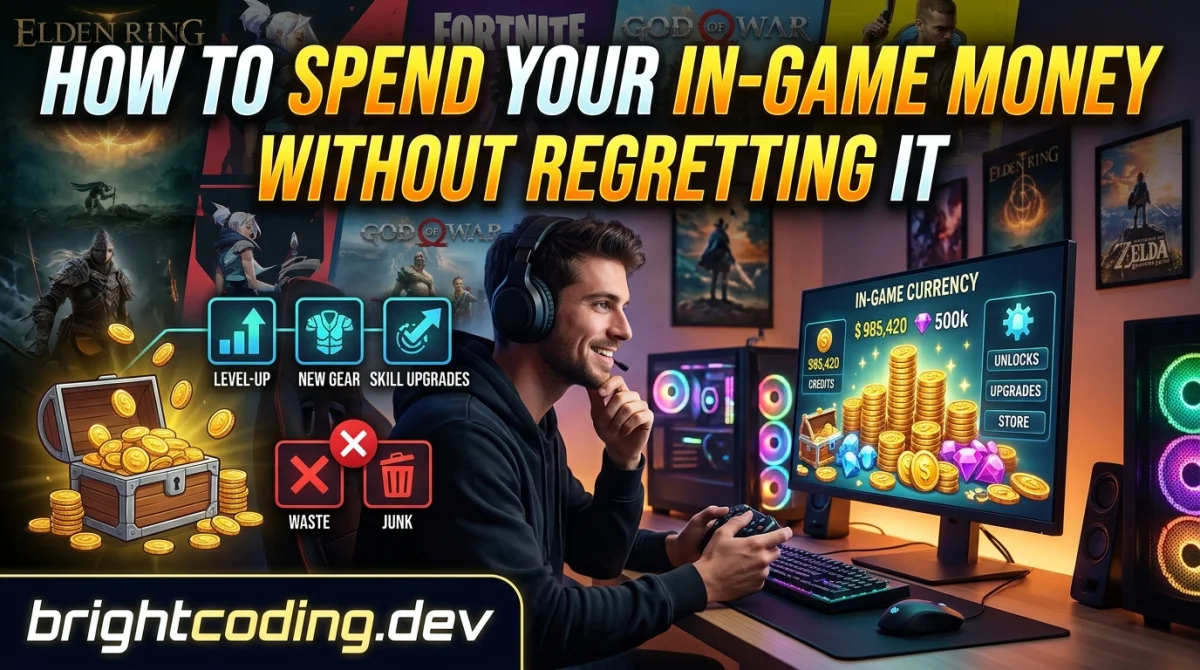
How to Spend Your In-Game Money Without Regretting It
You know the feeling. You grind for hours, finally get a decent chunk of credits, then blow half of it on a car that turns out to handle like a shopping trolley on ice. Or you max out an upgrade you didn't need, and suddenly you're broke when the thing you actually wanted appears in the shop.
This guide is here to stop that. In about 15 minutes of reading (and maybe a bit of poking around your own game), you'll have a repeatable system for spending in-game money on purpose instead of on impulse. It works for racing titles, open-world games, sports sims, basically anything with an economy and a shop. The car upgrade examples lean racing because that's where bad spending hurts most, but the logic travels.
What You Need Before You Start
- Your current balance and income rate. Know roughly how much you earn per hour of play. If you don't, note your balance now and check it again after a session.
- A short list of what you actually want. Two or three goals, not twenty.
- The shop and upgrade menus open. You need to see prices, not guess them.
- A note app or a scrap of paper. Seriously. Writing this down is half the method.
- Patience for one session. Don't buy anything until you've finished reading. That's the rule.
Step 1: Work Out What Money Actually Buys You
Before you spend a single credit, figure out what the economy rewards. In most racing games that means speed, handling, and reliability on the tracks you actually race. In other games it's gear, cosmetics, or convenience.
Write down the three things money can buy that would genuinely change how you play. Not what looks cool in a trailer. What changes your results.
Why it matters: Most regret comes from buying things that don't move the needle. A shiny paint job feels great for ten minutes. A better gearbox feels great for fifty races.
Practical tip: If you can't explain in one sentence how a purchase improves your performance or enjoyment, it's a want, not a need. Wants are fine, but they go in a separate budget (more on that in Step 4).
Step 2: Separate Needs From Wants (The Two-Pile Trick)
Make two columns on your note: NEED and WANT. Needs are things that unlock progress or fix a weakness. Wants are things that make you smile.
Most players blend these together and end up buying wants while telling themselves they're needs. Be honest. A neon underglow is a want. Upgraded brakes on a car you keep spinning out in is a need.
Why it matters: Naming the difference stops the little lies we all tell ourselves at the checkout screen.
Practical tip: For racing games especially, weaknesses show up in specific corners and specific tracks. If you keep losing on tight circuits, handling is a need. If you keep losing on straights, top speed is a need. Match the purchase to the failure. For more on reading your own weaknesses, the rank-up competitive guides are a good place to start.
Step 3: Check the Upgrade Curve Before You Max Anything
This is the big one for car upgrades. Almost every racing game uses a diminishing returns curve. The first upgrade level is cheap and gives a big jump. The last level is expensive and gives a small one. Games rarely tell you this clearly, so you have to look.
Open the upgrade menu and compare the stat change and the price for each level. Do the maths on cost per point of improvement, even roughly.
| Upgrade level | Approx. cost | Approx. stat gain | Verdict |
|---|---|---|---|
| Level 1 | Low | Large | Usually worth it |
| Level 2 | Medium | Medium | Depends on your goal |
| Level 3 | High | Small | Rarely worth it early |
The numbers above are illustrative, not real game figures. Check your own game's menu for the actual values, because they differ wildly between titles.
Why it matters: Spending everything to max one car often leaves you with a fast car you can't afford to maintain, race, or replace. A mid-tier upgrade across the board usually beats a maxed-out single stat.
Practical tip: Upgrade to the point where the next level costs more than a whole new car. That's your stopping signal.
Step 4: Set a "Fun Budget" So You Don't Feel Miserable
Here's the part purists hate: you should spend some money on fun. If every purchase is coldly optimised, the game stops being fun and becomes a spreadsheet.
Take your total balance and ring-fence a slice for pure enjoyment. Something like 10 to 20 percent is a reasonable starting point, though it depends on how tight your economy is. That slice is for the paint job, the silly horn, the car you love even though it's slow.
Why it matters: Players who never allow themselves a treat tend to snap and overspend later. A small, planned splurge keeps the discipline sustainable.
Practical tip: Spend the fun budget last, after your needs are covered. It feels like a reward instead of a leak.
Step 5: Time Your Purchases Around Sales and Events
Most game economies run sales, seasonal events, or rotating stock. If you're not in a hurry, waiting can save you real money.
Check the in-game shop rotation and any event calendar. Many games also run limited-time discounts around updates. Keep an eye on the gaming deals & free games hub for broader freebies and discounts, though always verify the offer inside your own game before counting on it.
Why it matters: A 20 to 30 percent discount (typical range, not a guarantee) on a car you were going to buy anyway is free money.
Practical tip: If a purchase isn't urgent, put it on a 48-hour hold. If you still want it after two days, buy it. If you forgot about it, you saved yourself the cash.
Step 6: Test Before You Commit When the Game Lets You
Many racing games let you test drive, rent, or borrow a car before buying. Use it. Do a few laps on a track you know well. Feel the handling, not just the stat bars.
If the game doesn't offer a test drive, watch a short gameplay clip or read a community thread about the car. Be wary of hype, but a lap in someone else's hands tells you more than a number ever will.
Why it matters: Stat bars lie. A car with better numbers can still feel wrong in your hands. Handling is personal.
Practical tip: Test on the track type you struggle with most. If the car fixes that, it's a real upgrade.
Step 7: Keep a Reserve Fund
Never spend down to zero. Keep a buffer, maybe enough to cover one mid-range purchase or a few races' worth of repairs and entry fees.
Why it matters: Games love to drop a surprise event, a limited car, or an unexpected cost right after you've emptied your wallet. A reserve turns a disaster into a minor inconvenience.
Practical tip: Decide your reserve number now and treat it as untouchable. Mine is roughly the cost of one decent car. Yours depends on your economy.
Step 8: Review What You Bought (And Learn From It)
After a few sessions, look back at your note. Which purchases paid off? Which ones did you forget about within a day?
This takes five minutes and is the single best way to get better at spending. Your own track record beats any guide, including this one.
Why it matters: You'll spot your personal spending pattern. Maybe you overspend on cosmetics, or you always max the wrong stat. Once you see the pattern, you can correct it.
Practical tip: Rate each purchase out of ten after a week of play. Anything below a six goes on a "don't repeat" list.
Pro Tips
- Buy the second-best tier, not the best. The top tier is usually priced for whales. The tier below often gives most of the benefit for a fraction of the cost.
- Prioritise handling over top speed in most racing games. You'll win more races with a car that grips than one that just goes fast in a straight line.
- Spend on your most-used car first. Upgrading a garage full of cars you rarely drive is a common trap.
- Watch the daily challenge and login rewards in whatever you play, including the GamingUp daily challenge if you want a quick free-play break. Free currency is still currency.
- Read patch notes. Balance changes can make an expensive car obsolete overnight, or turn a cheap one into a bargain. The gaming news & trends hub is handy for catching these.
- Don't chase sunk costs. If an upgrade turns out to be a dud, stop spending on that car. Good money after bad is the oldest mistake in any economy.
Common Pitfalls
Maxing a single stat. You pour everything into top speed and the car becomes undriveable on twisty tracks. Spread upgrades and match them to the tracks you race.
Buying on impulse after a big win. A sudden windfall feels like free money. It isn't. Put big wins into the reserve first, then plan.
Ignoring maintenance and entry fees. The purchase price isn't the whole cost. Factor in running costs or you'll have a nice car you can't afford to race.
Chasing the meta blindly. The "best" car in the community might not suit your driving style or your tracks. Test it or skip it. If you're curious about how different genres handle economies, the game genres explained hub breaks down the differences.
Forgetting the fun budget. All discipline and no treats makes the grind feel like a job. Spend a little on joy, on purpose.
Useful Resources
- Official game wikis and patch notes. The most reliable source for prices, stats, and balance changes. Always check these over fan guesses.
- Community forums and subreddits for your specific game. Good for real-world feedback on how cars actually drive.
- Your own notes. The best resource you have. Keep the list going.
- Free gaming tools on sites like GamingUp's tools page for tracking and planning, though verify what each tool does before relying on it.
FAQ
How do I know if an upgrade is worth it? Compare the cost against the stat gain and ask whether it fixes a weakness you actually have. If you can't name the problem it solves, skip it.
Should I ever spend everything on one car? Rarely. Keeping a reserve protects you from surprise events and lets you adapt. A single maxed car is usually less useful than a solid all-rounder plus savings.
Are sales worth waiting for? Often, yes, if the purchase isn't urgent. Check your game's shop rotation and event calendar. Discount amounts vary, so verify in-game rather than trusting a blog.
What if I already regret a purchase? Learn from it and move on. Note what went wrong, then apply the two-pile trick next time. Most games don't refund, so the lesson is the real return.
Does this work for non-racing games? Yes. Swap "handling and top speed" for whatever stats matter in your game. The core system (needs, wants, reserve, review) is the same.
Final Word
You don't need to be a spreadsheet wizard to spend well. You need a short plan, a little patience, and the honesty to call a want a want. Try the two-pile trick and the reserve fund for one week. If your balance feels healthier and your races feel better, you've already won. Now go enjoy the game. If you want more quick breaks between grinds, the free browser-games hub is right there.
Ready to play?
Puzzle, arcade, 3D, word & sports games for every age — instant play, no registration.
Comments
No comments yet. Be the first to share your thoughts!