How to Recover After a Crash and Still Win the Race
How to Recover After a Crash and Still Win the Race
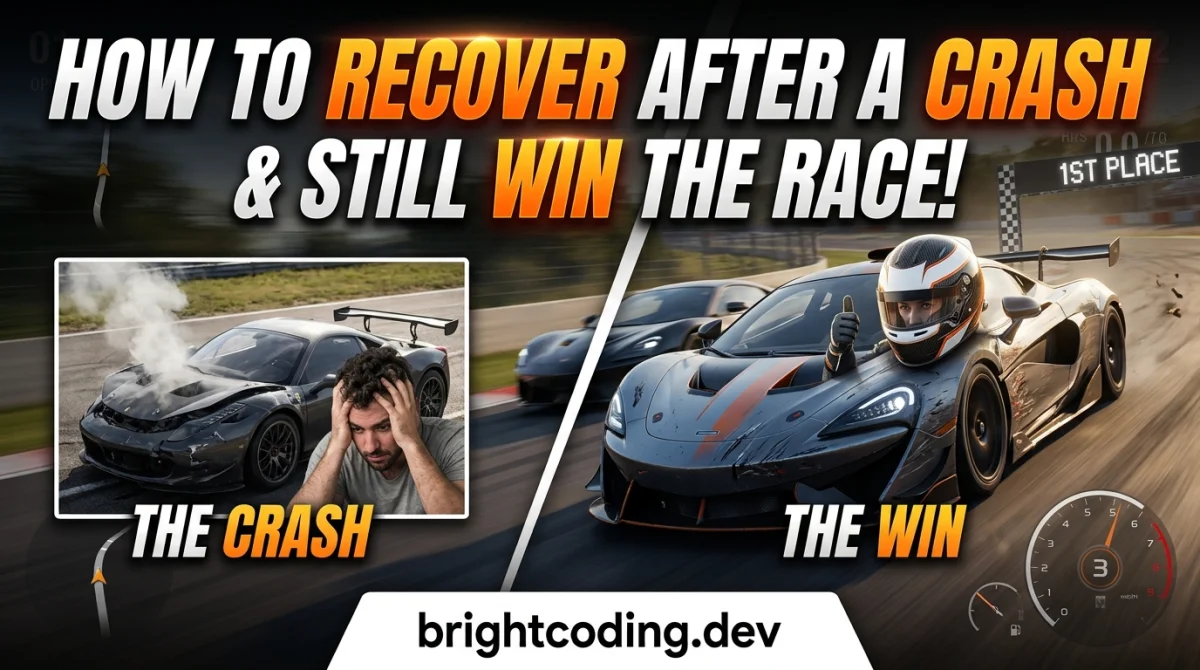
You just clipped the barrier. Or got punted into the gravel by someone who brakes like they're mad at the pedals. Either way, you're facing the wrong way and the pack is pulling away.
Here's the thing: the race is almost never lost at the moment of impact. It's lost in the ten seconds after, when most players panic, mash the throttle, and either spin again or wreck their tires for the next five laps. Read this guide and you'll know exactly what to do in those ten seconds, plus how to claw back the gap over the rest of the race. It takes about 15 minutes to read and a few practice sessions to make the reactions automatic.
What you need before you start
- A racing game you actually know the track in. Recovery is a skill; you can't learn it while also learning which corner comes next.
- A way to rewatch your crash. Most racers have replays or a saved clip feature. Use it.
- 20 to 30 minutes of solo practice time, ideally in time trial or free practice mode.
- A controller or wheel you're comfortable with. Switching mid-session just adds noise.
- Optional but useful: a look at the rank-up competitive guides if you're doing this in ranked lobbies, since recovery rules change when there's a rating on the line.
Step 1: Kill the instinct to floor it
The single biggest recovery mistake is trying to drive out of the crash at full throttle. Your car is probably still rotated the wrong way, and full throttle at low speed just spins you further.
What to do: the moment you stop moving forward, lift completely. Count one beat. Then apply throttle gradually, like you're leaving a pit box.
Why it matters: tires that are still sliding have almost no grip in any direction. Smooth inputs let them hook up again. This is the same principle behind every good driving tips guide, and it applies ten times over when you're sideways.
Practical tip: in most sims and arcade racers alike, a light, progressive throttle press from a standstill gets you moving faster than a full-send launch. Try both in practice and watch the timer.
Step 2: Get pointed the right way before you accelerate
Recovery time is roughly half steering, half patience. You want to face down the track before you commit to speed.
What to do: steer toward the racing line with small inputs, using the reverse gear if you're fully stopped and facing the wrong direction. Check your mirrors or the minimap first, because reversing into traffic is how you turn one crash into two.
Why it matters: accelerating while still rotated means you're fighting your own car. Every meter you travel sideways is a meter you'll have to make up later.
Practical tip: if you're facing backward on a narrow track, it's often faster to reverse a short distance to a wider section than to do a five-point turn in place. Approximate time cost: 2 to 4 seconds either way, so pick whichever gets you facing forward soonest.
Step 3: Check your damage and your tires
Not all crashes are equal. A light tap on a wall and a head-on into a tire barrier have very different consequences, and treating them the same will cost you.
What to do: glance at your damage indicator or handling feel in the first corner after recovery. If the car pulls, if braking distances feel longer, or if the wheel is off-center, adjust your driving style for the rest of the race.
Why it matters: a damaged car that you drive like a healthy one will crash again. Accept the new limits and drive to them.
Practical tip: in games with tire wear, a spin can flat-spot a tire, which causes vibration and reduced grip for several laps. If the game lets you pit without losing too much time, weigh it up. A rough estimate: a pit stop costs 20 to 40 seconds in most sims, so only take it if your pace is genuinely compromised.
Step 4: Rejoin safely, then reset your reference points
Once you're moving, the temptation is to immediately chase the car ahead. Don't. Spend one or two corners re-establishing your braking points.
What to do: brake slightly earlier than normal for the first corner after rejoining, hit your apex cleanly, and confirm the car feels predictable. Then start pushing again.
Why it matters: your rhythm is broken. Rebuilding it with one clean corner is faster than rebuilding it with three messy ones.
Practical tip: pick a specific visual marker (a curb, a sign, a shadow) and brake there. Having a concrete reference stops you from braking by feel, which is unreliable right after a scare.
Step 5: Read the gap, not the position
Your position on the leaderboard is a lagging indicator. The gap to the car ahead is what you can actually act on.
What to do: check the gap to the car in front and the car behind. If you're 4 seconds back with 15 laps left, that's very different from 4 seconds back with 3 laps left.
Why it matters: it tells you whether to push hard now or settle into a fuel and tire-saving rhythm and strike later. Racing recovery is a strategy problem, not just a driving problem, which is why it shows up constantly in the gaming strategy side of things.
Practical tip: don't burn your tires chasing a car that's clearly faster than you. Save the push for the last third of the race when others are struggling.
Step 6: Use traffic and the draft instead of fighting them
If there are cars ahead of you that you're lapping, or cars behind that are lapping you, use them. They're free speed or free chaos, depending on how you handle them.
What to do: tuck in behind a faster car for the draft if the game models it. Let a lapping car past cleanly if fighting them costs you more time than it gains.
Why it matters: a tow can be worth a few tenths per lap on long straights, and clean passes avoid contact penalties.
Practical tip: in games with blue flags or "let faster cars by" mechanics, obeying them usually avoids a penalty. Check your specific game's rules, since they vary.
Step 7: Bank the comeback in small chunks
Don't think about winning. Think about taking back one position, then the next.
What to do: set a mini-goal every few laps. "Catch the car ahead by lap 12." "Get within DRS or boost range by the final sector."
Why it matters: chunked goals keep your driving clean. Players chasing the leader in one heroic push almost always overdrive and crash again.
Practical tip: some racers have a daily challenge mode that's perfect for practicing comeback driving under pressure without hurting your rank. The daily challenge hub is a good warm-up before a ranked session.
Pro tips
- Brake earlier than you think after a crash. Your hands are still tense and your timing is off. One early braking zone costs less than one missed apex.
- Learn the track's escape roads. Knowing where you can run wide without losing time is a recovery skill in itself. It's track knowledge, and it's free.
- Watch your own replays in slow motion. You'll spot the exact input that caused the crash in about 30 seconds. Most players never do this and keep making the same mistake.
- Practice recoveries deliberately. In free practice, spin yourself on purpose, then try to lose as little time as possible. It feels silly. It works.
- Turn off the rage reset. The urge to restart the race after a crash is strong. Finishing a bad race teaches you more than restarting a good one.
- Check your assists. Traction control that's too aggressive can actually make low-speed recovery harder in some games. Test both settings and see which suits your style.
Common pitfalls
Mashing throttle to "make up time." This is the classic. You spin again, and now you've lost ten seconds instead of four. Lift, breathe, then go.
Reversing without checking. You'll back into another car and cause a pileup. Always look before you reverse, even in a hurry.
Ignoring damage. A car that's pulling to one side will bite you at the next high-speed corner. Adjust your driving, don't pretend it's fine.
Chasing the leader instead of the car ahead. The leader might be 30 seconds up the road. The car ahead is two seconds away. Take the achievable target.
Restarting the race. You lose the learning. Finish the race, even if you're last. The next one will be better because of it.
Useful resources
- Your game's built-in replay and telemetry tools. Underrated, and free.
- The tips, tricks and guides hub for game-specific recovery advice.
- The free gaming tools section for anything that helps you track lap times or analyze sessions.
- Community time trial leaderboards. Watching a fast ghost is one of the quickest ways to learn a track's safe lines.
- The free browser games hub if you want a low-stakes place to practice the basics without a ranked lobby watching.
FAQ
How long does it take to get good at recovery? Most players notice a real difference after a handful of deliberate practice sessions, maybe an hour or two total. It becomes automatic after that, which is when it actually saves you races.
Does recovery work in arcade racers, or only sims? Both, but the specifics differ. Arcade racers often have more forgiving physics and boost mechanics you can use to close gaps quickly. Sims demand smoother inputs and reward patience more.
Should I always pit after a crash? No. Estimate the time cost against the time you'd lose driving a damaged car. In most games, a pit stop is expensive enough that it's only worth it if your pace is badly hurt. Verify the numbers for your specific game, since they vary.
What if I crash on the last lap? Then it's damage control. Rejoin safely, finish the race, and take the points or position you can still get. Don't throw away a finish by trying a hero move.
Is it worth watching replays of other players' crashes? Surprisingly yes. Seeing how a fast driver recovers from a spin teaches you the correct inputs much faster than figuring it out yourself.
One last thing
Crashes are not the end of a race, they're a test of whether you can stay calm when everything's gone wrong. The drivers who win consistently aren't the ones who never crash. They're the ones who lose three seconds instead of ten.
Go spin yourself out in practice this week. Then go win the race you would have quit.
Ready to play?
Puzzle, arcade, 3D, word & sports games for every age — instant play, no registration.
Comments
No comments yet. Be the first to share your thoughts!