How to Find Rare Items and Loot Efficiently
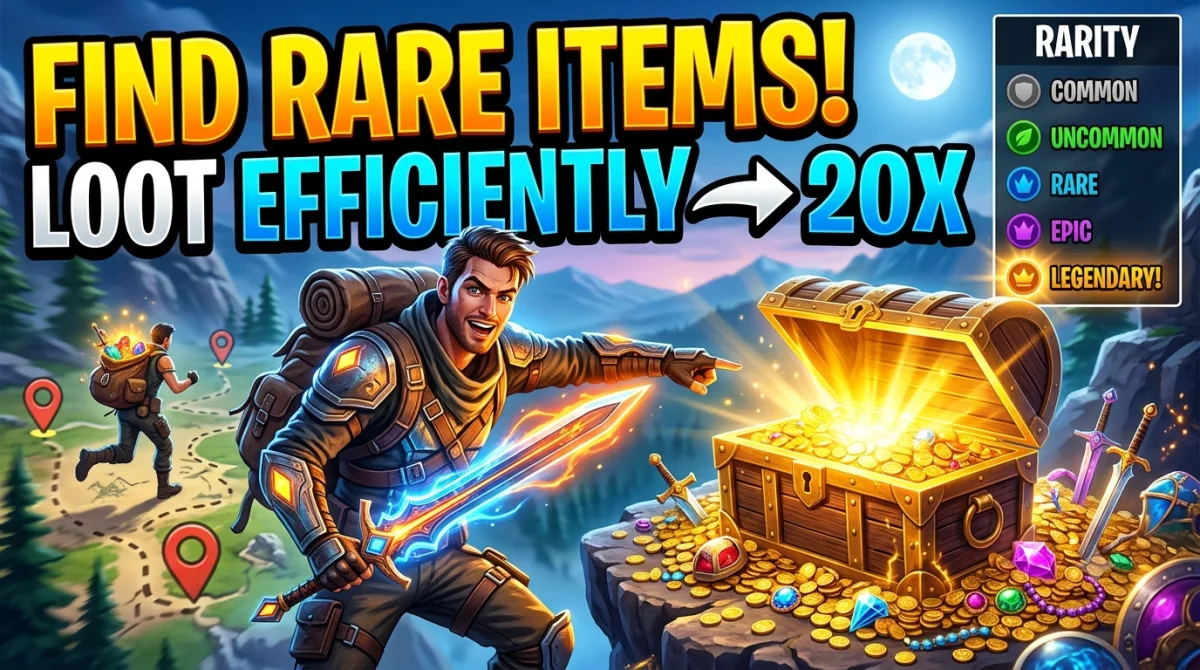
Keep reading: Time-Saving Tricks for Grinding Without Burning Out, Hidden Easter Eggs You Probably Missed in Popular Games, Unlockable Endings You Might Have Missed, and How to Farm Resources Faster in Open-World Games.
That one rare item everyone in your guild already has? Here's how to actually get it. Most players wander the whole map hoping to stumble onto rare items, and they waste hours for nothing. This guide replaces luck with a system: knowing where rare items and loot drop, building efficient farming routes, timing spawns, stacking luck, and tracking your runs. By the end you'll cut your grind time dramatically because the players with full inventories aren't lucky, they're methodical about it.
Quick answer: to find rare items fast, learn each item's exact source, farm the route with the highest drops per hour, respect spawn timers and luck-boosting buffs, and group up when the game shares loot. Focus on repeatable content that drops what you need instead of wandering the entire map. Track what you've farmed so you never grind a dead route twice.
Know Your Source: Where Rare Items Actually Drop
Before you farm anything, find out where it drops. Rare items almost always come from a limited set of sources, and guessing wastes your best hours.
- Check the database. Most popular games have community wikis that list every item's drop source and approximate drop rate. rates are data-mined, not official, but close enough for planning.
- Target bosses, elites, and named enemies. Rarer enemies typically drop higher-rarity loot than trash mobs.
- Complete the right content type. Raids, endgame dungeons, and event content usually hold the best loot tables.
- Buy or craft the item instead. Some "rare" items are actually rare because players ignore the vendor, recipe, or quest that gives them.
The key insight: rarity is about source, not just odds. A legendary item from an easy repeatable boss is easier to farm than a rare item from a one-time quest you already missed. Match your grind to the source that fits your schedule and skill level.
Build a Farming Route That Maximizes Drops Per Hour
Your goal isn't to kill the most enemies it's to maximize drops per hour. That's loot efficiency, and it's a route-design problem.
- Find the best farming spot. Check community tier lists for the fastest boss or dungeon for your level.
- Design a loop. Start at a spawn point, kill your target, and rotate through a fixed circuit that brings you back before respawns.
- Cut travel time. Skip far-away packs and tunnel the cluster with the best drop table.
- Layer objectives. Kill two birds: farm a boss and complete a daily quest or event in the same route.
- Track your time. Log kills and drops per 30-minute session, then compare routes.
Drops per hour matters more than drops per kill. A boss that drops one item every 15 minutes is slower than a pack that drops a small chance every 60 seconds unless you're chasing that specific item. Math out the per-hour value, and route accordingly.
Use Spawn Timers and Rarity Buffs
Timing separates efficient farmers from full-time wanderers. Two tools dominate: spawn timers and luck.
- Spawn timers. Named enemies and world bosses respawn on fixed timers often hours, sometimes longer. exact intervals vary by title. Log the time you kill a target, then return just before its window opens.
- Shard, phase, or channel hopping. Many MMOs and co-op games use instanced servers; leaving and rejoining can reset a respawn cycle. some titles prevent this with lockout timers.
- Luck and rarity buffs. Food, potions, gear, and party bonuses that boost "magic find," "item find," or luck exist in many games. Stack them before boss runs.
- Hardest difficulty = best tables. Higher difficulty usually improves drop rates or adds exclusive drops. Run the hardest content you can clear quickly.
One warning: spawn timers and luck buffs are per-game systems with their own rules. Read the wiki for your title before assuming the mechanics, and flag anything the community disagrees on. The buff you stack is wasted if the game caps it.
Group Up: How Multiplayer Loot Drops Change the Math
Farming in a group changes both the odds and the loot rules, and it's usually a win.
- More kills per minute. Four players clearing a pack four times faster means four times the drop chances.
- Shared drops are common. Many MMOs and shooters give each player their own loot roll, so a full group multiplies everyone's chances.
- Trading and binding. In some games you can trade or share rare items, letting a group arm one player at a time on purpose.
- Check the drop rule. Free-for-all, need-before-greed, and personal loot change the strategy completely. your game's exact loot setting.
The math is simple: solo farming divides your attention across every system at once, while a good group concentrates killing power on one route. Even with a mediocre party, more kills per hour almost always beats a perfect solo route. That's efficiency most grinders leave on the table.
Advanced Loot Tricks Most Players Miss
Beyond the basics, the best farmers use systems most players never touch:
- Event and season passes. Limited-time events frequently drop exclusive rare items with better odds than permanent content.
- Secret or hidden drops. Some rare items come from hidden bosses, puzzle rooms, or achievements check secret-unlocks guides before you grind the obvious table.
- Weekly lockouts. Some raids let you farm a boss once per week; skipping it is the costliest mistake in loot efficiency.
- Alternative characters. If a drop is class-locked, an alt run multiplies your weekly shots at it.
Rare items hide in the game's edges: event rotations, hidden rooms, and weekly resets. Players with legendary inventories tend to read guides about the weird stuff, not just farm the same boss forever. community-discovered drops can shift with patches, so refresh your sources every season.
Track Your Runs: The Efficiency Habit
Farming without tracking is gambling with extra steps. The players who find rare items fastest are the ones who treat loot like data.
- Keep a simple log. A sheet or note: date, boss or route, attempts, drops received.
- Count your kills, not your hours. "200 boss kills" tells you more than "2 hours farming."
- Stop chasing sunk cost. If a route is 50 kills with no sign of your item, re-check the drop source and switch.
- Review weekly. Which routes gave the best drops per hour? Double down on those.
Note: many games run on random number generators (RNG), so bad-luck streaks are normal but that cuts both ways. A system of tracking tells you whether a route is actually bad or just unlucky, and that's the difference between quitting and pushing through to the drop.
Key Takeaways
- Find the exact drop source before you farm; rarity is about source, not just odds.
- Design routes for drops per hour, not kills per minute.
- Log spawn timers, stack luck buffs, and use the right difficulty.
- Group up when loot rules allow more kills mean more chances.
- Track every run and re-evaluate routes weekly; RNG streaks are normal.
Frequently Asked Questions
What is the fastest way to find rare items?
Learn the item's exact drop source from the community wiki, then farm the highest drops-per-hour route with spawn timers and luck buffs active. Grouping up and running weekly lockouts and events multiplies your chances far beyond random wandering.
How do drop rates work in games?
Most games roll an invisible random number generator when loot spawns, and each item has a weighted chance to appear. Drop rates are usually data-mined by the community rather than published, so treat wiki numbers as estimates.
Are rare items easier to find in a group?
Usually yes if each player rolls their own loot, a group multiplies drop chances, and some games let you share or trade finds. Check your game's loot setting first, since free-for-all and personal-loot systems change the strategy.
What should I do after farming for rare loot?
Log the results kills, drops, and time then compare routes and re-check the item's source. If you're well past the expected kill count with nothing, confirm the route hasn't been patched before you keep grinding.
Do luck boosts actually increase rare drop rates?
Many games include luck, magic-find, or item-find stats that raise drop odds, but some cap the effect or apply it only to specific loot tables. Check your game's wiki and community testing before stacking expensive buffs.
Conclusion
Finding rare items is a system, not a lottery. When you pin down the drop source, farm a route built for drops per hour, respect timers and buffs, group up, and track every run, the grind turns into a schedule and your inventory fills on schedule. Luck is just the randomness you've accounted for. Build your first route tonight and see how fast the drops follow.
What's the rarest item you've ever farmed for, and how long did it take? Drop your story in the comments, share this with your guild or Discord, and follow for more loot guides and secret-unlocks tips.
Ready to play?
Puzzle, arcade, 3D, word & sports games for every age — instant play, no registration.
Comments
No comments yet. Be the first to share your thoughts!