How Pros Practice: A Training Routine You Can Copy
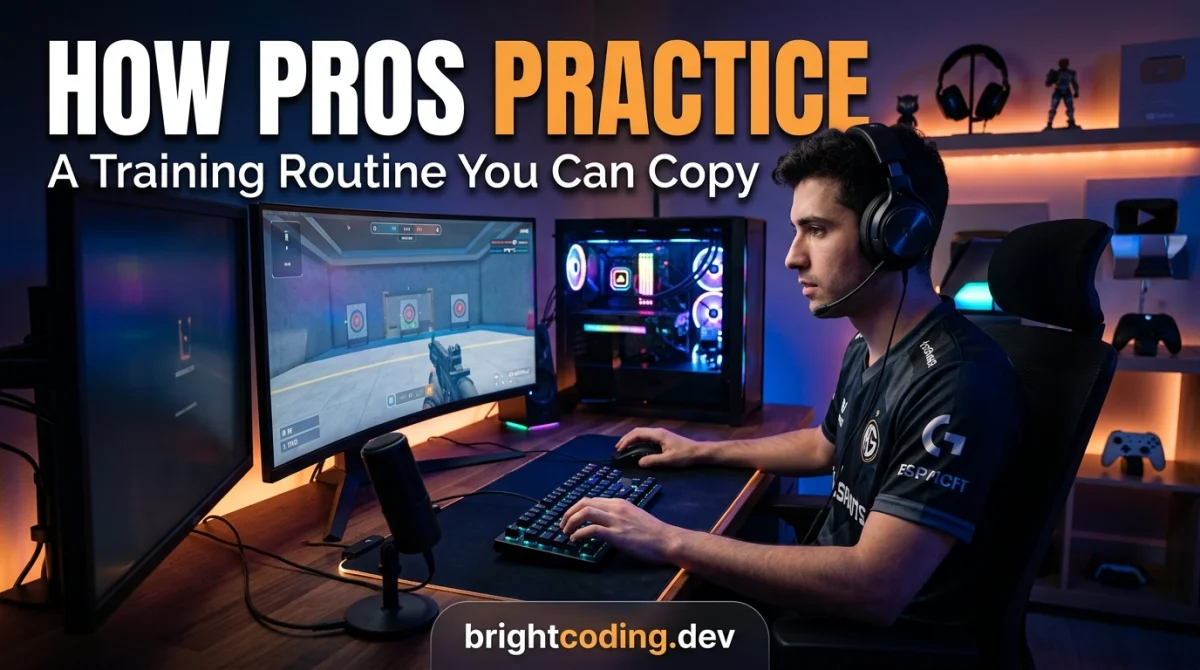
Most players assume pros got where they are through raw talent or an insane amount of hours. Watch any pro stream and the truth is more boring, and more useful: they practice on purpose. Every session has a structure, a warm-up, focused drills, replay review, and a capped number of fully focused matches. There is no magic in it, just a repeatable routine you can copy tonight. This guide breaks down that structure into stages, gives you the exact numbers pros use, and ends with a realistic weekly schedule for players with a job, a class schedule, or a life outside the game.
Quick answer: pros practice in four stages: a 10-minute warm-up, 20 to 30 minutes of focused drills on one skill, a single replay review, and a capped number of fully focused ranked games. They never autopilot, never grind into burnout, and never judge progress by a single day. Copy the structure and the numbers, and run it five days a week. Results start showing in two to four weeks, because consistent small sessions beat one giant weekend grind every time.
The Four Stages of a Pro Practice Session
Nearly every pro follows the same skeleton, whether they play a MOBA, a shooter, a fighting game, or a battle royale. The game changes the drills, but the structure stays the same: prepare, focus, review, then play for real. Skip a stage and the whole session gets weaker, which is exactly why casual players plateau while pros keep climbing.
Stage 1: The 10-Minute Warm-Up
Pros do not load into ranked cold. Ten minutes of light practice wakes up your hands, your eyes, and your reaction time before any match counts. In a shooter, that means tracking drills; in a fighting game, it means your bread-and-butter combos. This is the same 10-minute warm-up routine pros use, and it costs you less than one loading screen.
Stage 2: Focused Drills on One Skill
Deliberate practice means choosing one weakness and hammering it for 20 to 30 minutes with your full attention. Multi-skill practice feels productive but transfers almost nothing, while single-skill focus shows change in days. This is the core of how to get better at any competitive game, and it is the stage casual players skip.
Stage 3: The Single Replay Review
After practice, pros watch one replay of their most recent real match and look only at their deaths and lost fights. They do not watch to feel good about a win. They watch to find one repeated mistake, tag it, and set one fix for tomorrow. It is uncomfortable and it works, which is why reviewing your own matches is the highest-leverage habit in competitive gaming.
Stage 4: Capped Ranked Games
Finally, the matchmaking practice. Pros cap this stage hard, often at three to five games, and they leave the moment focus drops. A capped session of sharp games beats twelve autopilot games, because every game after the cap trains bad habits instead of good ones.
Why Pros Do Not Grind Endless Matches
Grinding is the amateur move. When you play for six hours straight, fatigue quietly destroys your decision-making while you still feel awake. Pros treat ranked games like a resource and spend them only when fresh. The math is simple: ten bad-quality games feed your MMR nothing, while five sharp games raise it. This is also the real secret to climbing ranked, and it has nothing to do with mechanical talent.
The Drills Pros Actually Run
The drills vary by genre, but the principle is universal: make the drill harder than the match.
- Isolate one mechanic and repeat it until it is automatic.
- Add pressure by racing a timer or tracking a kill target.
- Run the drill against a moving target, never a static dummy.
- End the drill when reps stop improving, usually after 20 to 30 minutes.
One focused drill per session, five days a week, beats a perfect plan you quit after a month.
The Weekly Routine You Can Actually Follow
A Sample Week for Busy Players
- Monday: 10-minute warm-up, 20 minutes of one drill, 3 ranked games, one replay review.
- Tuesday: same structure, different drill focused on a weakness found in Monday's replay.
- Wednesday: same structure, but review the previous session's replay in detail.
- Thursday: 10-minute warm-up, 2 ranked games only, stop early if tilted.
- Friday: full structure plus a longer 30-minute drill block.
- Saturday and Sunday: rest or casual games only. Recovery is part of the routine.
Copy the numbers first, then adjust. A routine you actually run beats a perfect schedule you skip.
Three Mistakes That Kill Practice Sessions
- Skipping the warm-up to jump straight into ranked. The first games decide your session.
- Drilling the same comfortable skill instead of your real weakness. Comfort is not progress.
- Reviewing only wins. Reviewing your losses teaches you; wins mostly flatter you.
How Long Until You See the Results
Give the routine two to four weeks before judging it, because rank is a lagging indicator of your real level. If you still feel stuck after a month of honest practice, you need to understand how skill plateaus actually work and how long they take.
Key Takeaways
- Pros practice in four stages: warm-up, one focused drill, replay review, capped ranked games.
- Copy the numbers: 10 minutes, 20 to 30 minutes, one replay, 3 to 5 games.
- Grinding long sessions trains bad habits; short sharp sessions build good ones.
- Drill one weakness at a time and make drills harder than real matches.
- Judge the routine after two to four weeks, never after one day.
- Rest days are part of the plan, not a break from it.
Frequently Asked Questions
How many hours a day do pro players practice?
Most pros practice three to six hours a day, but only a fraction of that is ranked. The rest is warm-up, drills, and replay review. A focused hour beats a sloppy five hours every time.
Do pros use aim trainers?
Many do, but only as part of a warm-up or a focused drill block, never as the whole session. Aim training transfers only if the drill mirrors how you actually aim in a match.
How long should a practice session be?
Sixty to ninety minutes is the sweet spot for most players. Long enough for a warm-up, a drill, and a few real games, short enough that focus stays high.
Can I copy this routine with only one hour a day?
Yes. Cut the drill to 15 minutes and the ranked cap to three games. The structure matters more than the volume, and a one-hour routine run daily beats a four-hour session run weekly.
Conclusion
Pros are not gifted, they are systematic. Copy the four stages, use the exact numbers, and run the weekly plan for a month, and you will feel the difference even before the rank catches up. The ladder rewards routine more than talent, so build the routine first and let the rating follow.
Which stage of the routine are you currently skipping? Tell us in the comments, share this guide with your duo, and subscribe for more habits that turn practice into rank.
Ready to play?
Puzzle, arcade, 3D, word & sports games for every age — instant play, no registration.
Comments
No comments yet. Be the first to share your thoughts!