Common Beginner Mistakes That Are Costing You Wins
Keep reading: Fighting Games 101 Terms Every New Player Should Know, How to Get Better at Any Competitive Game, Esports Scenes to Watch This Year 2026 Guide, and How to Rank Up Quickly in Ranked Modes.
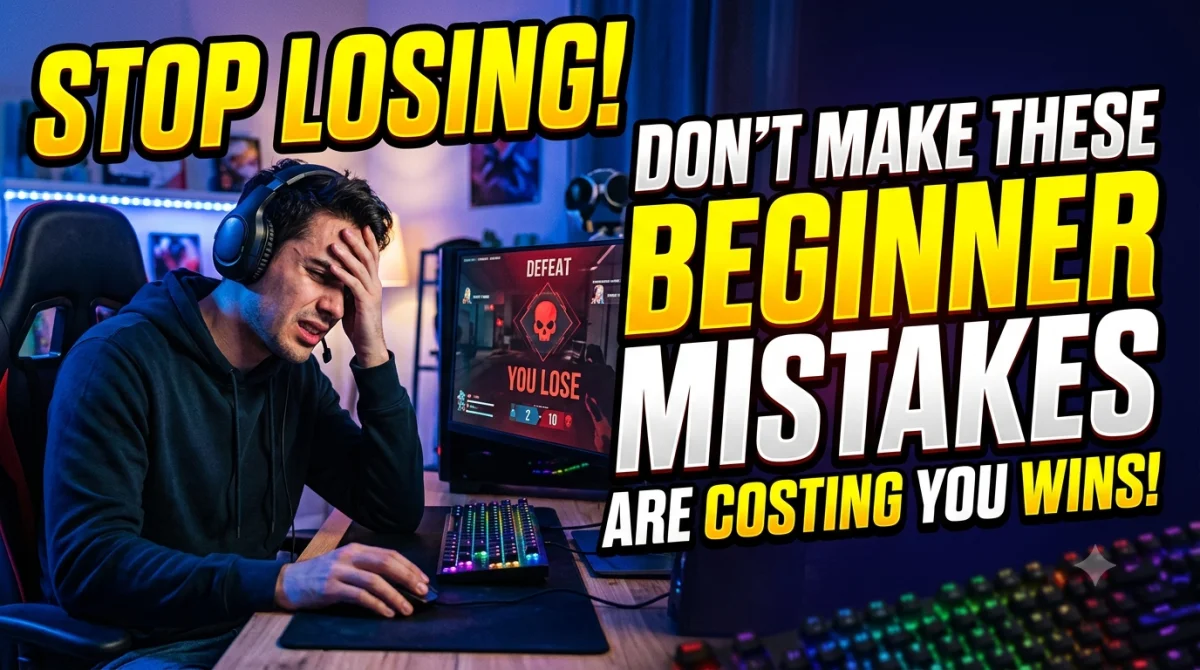
You're grinding ranked, putting in the hours, and the wins just won't stick. Sound familiar? The frustrating truth is that most losses come from beginner mistakes, not a lack of talent. This guide walks through the most common fixable errors autopilot play, ignored map awareness, kill-chasing, wasted resources, and tilt and exactly how to fix each one. Fix these and you'll climb faster than any aim-trainer or meta-copying ever will, because solid decision-making beats raw mechanics at almost every skill level.
Quick answer: most losses come from fixable beginner mistakes, not lack of skill playing on autopilot, ignoring the minimap, over-extending to chase kills, mismanaging economy or resources, and tilting after deaths. The fastest win-rate gains come from improving awareness and decision-making, not grinding mechanics. Pick one mistake, drill it for a week, and watch your results climb.
Playing on Autopilot: The Biggest Beginner Mistake
Autopilot is when you stop actively thinking and run on habit doing the same rotations, buying the same items, pushing the same lane regardless of what the enemy is doing. It's the number one reason skilled players lose to "worse" opponents.
- Slow down at decision points. Pause before every major choice: engage, retreat, use an ultimate, spend resources.
- Ask "why am I doing this?" If you can't answer, the action is probably autopilot.
- Narrate your play. Talk through your decisions out loud or in a Discord call; it forces conscious thinking.
- Change your routine. Break stale patterns a different opening or route forces your brain back online.
Autopilot creeps in hardest during long sessions. Cap your ranked sessions and take breaks; a fresh brain makes better calls than a tired one. The goal is active decision-making on every play, because the enemy isn't autopiloting when they're about to punish you.
Ignoring the Minimap and Map Awareness
Map awareness is knowing what's happening around the map enemy positions, objective timers, and where your team is even when you can't see it. The minimap is the cheapest information source in gaming, and beginners treat it like an afterthought.
- Glance at the minimap every few seconds. Pros check it constantly; beginners almost never do.
- Learn to read missing lanes. If an enemy lane is suddenly empty, they're either recalling, farming the jungle, or coming for you.
- Track objectives and spawn timers. Knowing when a boss, buff, or crate respawns wins fights before they start.
- Communicate what you see. One "enemy top is missing" callout can save an entire team.
Build a metronome for awareness: every time you take a last-hit, clear a wave, or reposition, glance at the minimap for half a second. After a few sessions it becomes reflex, and reflexes don't tilt. Better awareness converts ambushes into free kills instead of lost games.
Over-Extending: Chasing Kills You Can't Secure
Over-extending means pushing too far into enemy territory chasing a low-health enemy past safe ground, or staying for "one more hit" when you should retreat. It's the single most common way beginners feed kills.
- Respect fog of war. If you can't see the enemy team, assume they're about to appear.
- Only chase what you can secure. Chasing into an enemy tower, base, or teammates is a trade in their favor.
- Set a mental leash. Before you commit, decide where you turn back then honor it.
- Trade your life only for objectives. Dying for a kill is fine when it wins a fight or objective; dying for a single kill isn't.
Kill score is cosmetic; net worth and objectives are what win games. A kill that trades one-for-one while your lane and gold fall behind is a loss. Learning restraint when to push and when to pull is the difference between a fragger and a winner.
Wasting Resources and Economy
Every game has resources: gold, ammo, potions, currency, cooldowns, mana. Beginners spend them on the wrong things and starve themselves mid-game. Managing them well is a beginner mistake reversed into an advantage.
- Buy for your role and plan. Spend on items, upgrades, or loadouts that fit your win condition, not impulse picks.
- Don't blow cooldowns on nothing. An ultimate wasted on a kill you didn't need is an ultimate missing in the next fight.
- Know when to save vs. spend. In some games, banking economy to buy in later rounds beats buying something cheap every round.
- Never sit on a full resource bar. Unspent gold, energy, or charges is wasted power.
Check what top players in your game buy first, then ask why. Understanding the reason behind a build teaches you to adapt, while copying the item list teaches you nothing. Sound resource management snowballs: the earlier you're efficient, the more lead you build before the enemy can respond.
Tilting: How Emotion Costs You Wins
Tilt is the emotional spiral anger and frustration that turns one bad play into five. It's a beginner mistake that pros still fight, because it attacks decision-making at the exact moment you need it most.
- Use a death rule. After every death, take a breath and do one concrete mental reset before you act.
- Focus on the next action, not the last one. Review mistakes after the match; in the match, play the present.
- Mute toxic chat. One negative callout can flip your whole mindset; protect your focus.
- Play to improve, not to win. When a loss is learning, a loss can't break your composure.
Tilted players make aggressive, reactive plays the same over-extensions and bad engages from earlier. If you feel yourself heating up, the strongest move is a short break. Emotion is a resource, and spending it on a teammate's mistake leaves none for your own plays.
How to Fix Your Mistakes Faster
Fixing mistakes is a skill, and there's a loop that makes it fast:
- Pick one mistake per week. Focus beats shotgun self-improvement.
- Review one replay per session. Watch your deaths and big decisions with fresh eyes.
- Tag your errors. Note what type of mistake it was positioning, economy, awareness, or emotion.
- Set a single practice goal per match. "Check minimap every 5 seconds" beats "play better."
- Re-test weekly. If the mistake recurs, your fix wasn't specific enough.
This is how beginners become ranked climbers: deliberate, targeted practice instead of passive grinding. The beginner mistakes above aren't personality flaws they're habits, and habits change with repetition. the fastest improvers typically spend as much time reviewing as they do playing.
Key Takeaways
- Autopilot play is the biggest beginner mistake; force conscious decisions.
- Map awareness converts ambushes into kills check the minimap constantly.
- Over-extending to chase kills feeds the enemy; respect fog of war.
- Manage resources with a plan, and never sit on full resource bars.
- Tilt is a skill issue; use a reset ritual and play to improve, not just win.
Frequently Asked Questions
What is the most common beginner mistake in gaming?
Playing on autopilot running on habit instead of actively reading the game. It shows up as predictable rotations, repeated bad purchases, and blind pushes into enemy territory, and it's the root of most other beginner mistakes.
How do I stop tilting in ranked games?
Use a reset ritual after every death: take one breath, mute toxic chat, and focus only on your next action. Review mistakes after the match instead of during it, and take a short break when you feel yourself heating up.
How long does it take to improve game sense?
Most players see measurable improvement within a few weeks if they review replays and practice one specific skill per session. Game sense grows from deliberate repetition, not from hours of autopilot play.
Should beginners focus on mechanics or game sense?
Game sense first. Mechanics only matter when you know what to do with them, and decision-making errors cost far more games than missed shots. Drill both, but prioritize awareness, economy, and positioning.
How can I review my own gameplay?
Record or replay one match, then watch every death and big decision with fresh eyes. Tag each error by type positioning, economy, awareness, emotion and set one specific fix for the next session.
Conclusion
Beginner mistakes don't mean you're a bad player; they mean you have clear, fixable targets. Kill the autopilot, watch the minimap, leash your chase, spend smart, and protect your headspace, and you'll climb without a single mechanical change. Improvement becomes a habit loop, and your win rate follows the loop. Run one session with a single practice goal, log the result, and repeat next week. Start with one fix tonight.
Which beginner mistake above costs you the most wins? Name it in the comments, share this with your duo or squad, and follow for more guides that turn losses into lessons.
Ready to play?
Puzzle, arcade, 3D, word & sports games for every age — instant play, no registration.
Comments
No comments yet. Be the first to share your thoughts!