10 Advanced Racing Techniques Beginners Should Learn Early
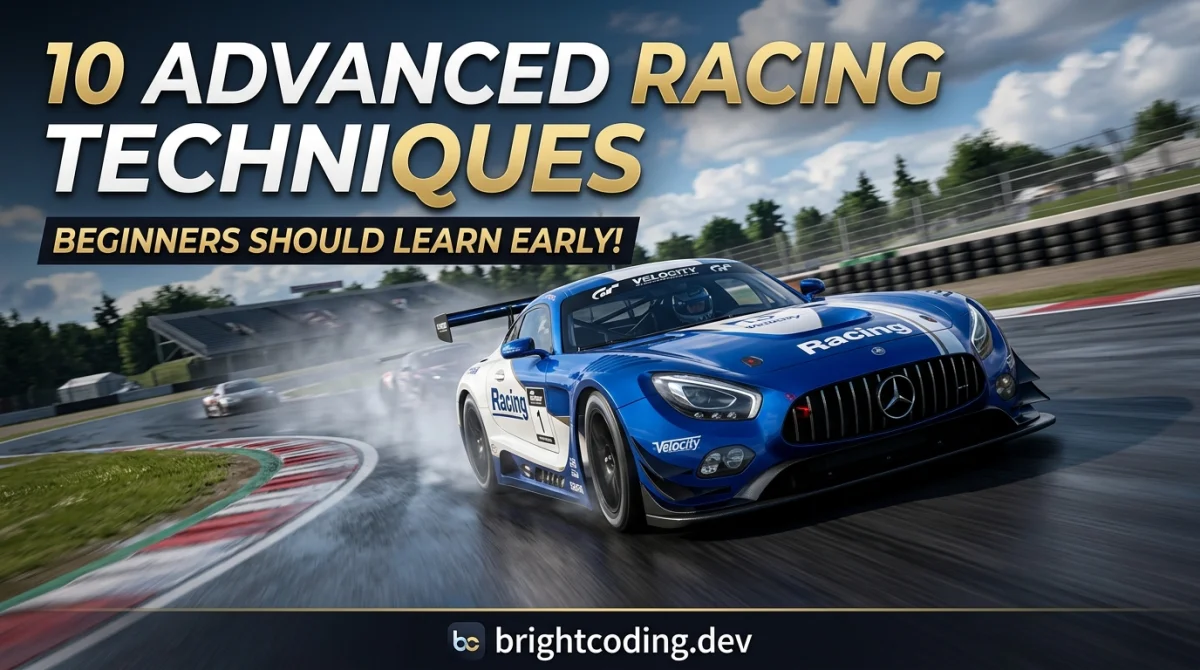
I was three corners from the finish at Monza, half a second ahead of a guy who had been breathing down my neck for two laps, and I braked exactly where I always braked. That was the problem. I locked the fronts, slid wide into the gravel, and watched him take the win while my car did a slow, humiliating pirouette in the dust.
The replay made it worse. The whole time I was pushing, my hands were doing two things at once: turning and braking. That sounds normal until you learn that in a real racing car, those two inputs are fighting each other. You can only ask the tires for so much grip, and if you spend it all on turning, there is nothing left for stopping.
That one lost race is where this list starts. Not because I am fast now, but because I spent months learning things the hard way that a beginner can pick up in a weekend.
The backstory
I got into sim racing the way a lot of people do: bought a wheel on a whim, booted up a racing game thinking my years of arcade racers counted for something, and promptly got lapped by people who sounded like they were twelve. For the first month I blamed my hardware. Then I blamed the game. Then I finally watched a few laps from a faster driver and realized I was doing almost everything wrong.
The gap between "can complete a lap" and "can complete a lap quickly" is enormous. These ten techniques closed more of that gap for me than any new wheel or setup ever did.
Beat the brake and the steering wheel fighting each other
This is the big one, and it is the reason I crashed at Monza. Tires have a fixed budget of grip, and you split that budget between braking, turning, and accelerating. If you brake hard and turn hard at the same time, you overspend and the car slides.
The fix is called trail braking, and it sounds fancier than it is. You brake hard in a straight line, then as you turn in, you slowly ease off the brake instead of letting go all at once. The car rotates into the corner because the weight is still on the front tires, and you are not asking them to do two jobs at full power.
My first attempts were ugly. I either held the brake too long and spun, or released it too early and ran wide. It took me maybe ten hours of practice laps before it stopped feeling like a magic trick and started feeling like a habit. Worth every minute.
Stop treating the accelerator like an on/off switch
For weeks my exits looked like a teenager learning to drive stick. Full throttle, wheelspin, sideways, crash. What I needed was progressive throttle: feed it in as the car straightens, not before.
The trick that helped me most was thinking about the car's weight. When you are still turning, the rear tires are already busy. Stomp the throttle and you overload them, and the back steps out. Squeeze it in gradually and the car plants and pulls.
Games differ here, and that matters. On a controller, the trigger travel is short, so you have to be gentle. On a wheel with load-cell pedals, you have much finer control over that last ten percent of travel. If you are on a controller and struggling with wheelspin, check your settings before blaming your thumbs.
Learn to look where you want to go, not where you are
I spent my first month staring at the corner I was in. That is why I was always reacting, never anticipating.
The change came when I forced myself to look at the exit of the corner, then the next corner, then the one after. Your hands follow your eyes more than you think. When I started looking two corners ahead, my lines got smoother without me consciously changing anything.
This is free speed. It costs nothing, requires no new hardware, and it works in every racing game ever made. If you only take one thing from this article, take this.
The moments that actually taught me
Learning racing technique is not a smooth curve. It is a series of plateaus and sudden drops, and the drops usually come right after you feel like you are getting worse.
The night I stopped chasing lap records. I spent a week obsessing over my best lap time, and my consistency fell apart. When I switched to trying to run ten laps within half a second of each other, my race results improved immediately. Consistency wins races. One fast lap does not.
The race I won by braking earlier. Counterintuitive, but true. I was braking so late that I was ruining my exits. Braking a touch earlier let me get on the power sooner, and I carried more speed down the following straight. Late braking is a trap for beginners.
The time I finally set up my wheel properly. I had been racing with force feedback cranked so high that my arms were exhausted by lap five. Turning it down made me smoother and, weirdly, faster. If your arms hurt after a session, that is not toughness, that is bad settings.
If you want a structured path through all of this instead of my chaotic trial and error, the tips, tricks and guides hub is a good place to start. I wish I had found something like it before I spent a month reinventing the wheel, badly.
Honest pros and cons
The upside of learning these techniques early is real. You skip months of bad habits, your lap times drop fast, and you stop being a rolling hazard in online lobbies. Trail braking and proper throttle control alone took me from "backmarker" to "midfield" in a couple of weeks.
The downside is that it is genuinely frustrating at first. You will be slower before you are faster, because you are thinking about every input instead of driving on instinct. There were evenings I quit in a bad mood because a technique that worked in practice fell apart in a race.
Also worth saying: none of this requires expensive gear. A basic wheel helps, but you can learn every technique here on a controller. I know people who are quicker than me on a gamepad, and it stings a little.
What I learned
Patience beats talent in the early months. The people who improve fastest are not the most naturally gifted, they are the ones who practice deliberately instead of just grinding races.
Consistency is worth more than a single hero lap. A driver who never crashes will beat a driver who occasionally sets a record and then bins it.
Your settings matter more than you think. Force feedback, sensitivity, and pedal calibration can make you faster or slower before you turn a single corner.
Watching your own replays is uncomfortable and essential. I cringe every time, but I always spot at least one repeated mistake.
Nobody is watching you struggle. This one took me too long to accept. The lobby moves on. Your bad race is forgotten in thirty seconds.
Quick practical tips
- Practice one technique at a time. Trying to fix braking and throttle in the same session means fixing neither.
- Run short, focused sessions. Forty-five minutes of deliberate practice beats three hours of mindless racing.
- Pick one car and one track for a week. Learning a new car every session resets your progress.
- If you are chasing rank, the rank-up competitive guides cover the mental side, which matters as much as the driving.
- Turn off the racing line once you are comfortable. It teaches you to react to a glowing strip instead of reading the track.
FAQ
Do I need a wheel to learn these techniques? No. A controller works fine, especially with trigger sensitivity tuned. A wheel makes trail braking easier because you have finer control, but it is not required. Expect a decent entry-level wheel to run you roughly $200 to $400 depending on the bundle, though prices move around, so check current listings.
How long until I actually get faster? For me, about two weeks of focused practice before the techniques paid off in lap times. The frustrating middle stretch, where you are slower and confused, lasted most of that time.
Which technique should I learn first? Look-ahead and throttle control. Both are simple to understand and immediately useful. Save trail braking for when those feel automatic.
Is it worth practicing in a slower car? Yes, and I wish I had done it sooner. Slow cars give you time to process what the car is doing. Jumping straight into a high-downforce monster hides your mistakes until they become expensive crashes.
I still think about that Monza lap sometimes, mostly when I catch myself braking and turning at the same time. Old habits, but at least now I know what I am doing wrong, and that is most of the battle.
Ready to play?
Puzzle, arcade, 3D, word & sports games for every age — instant play, no registration.
Comments
No comments yet. Be the first to share your thoughts!