Top 10 Beginner Tips Every New Gamer Should Know
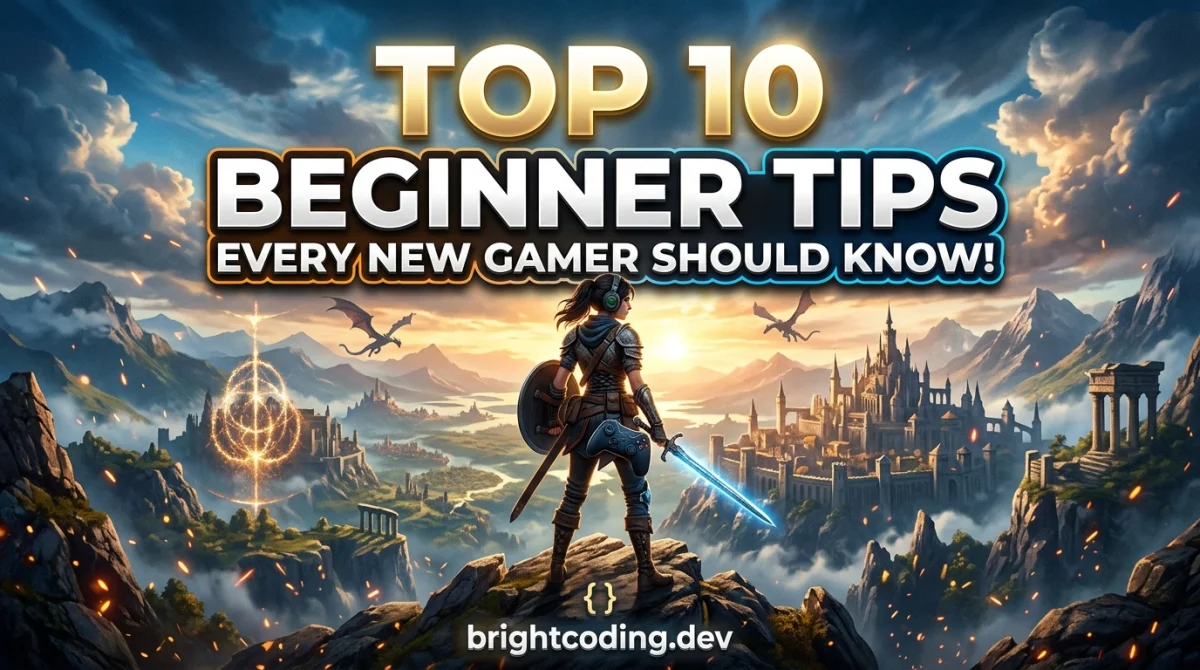
New to gaming? These 10 beginner tips cover everything from choosing your first game to finding welcoming communities. Start your journey the right way.
The box is open. The controller is in your hands, still smelling faintly of factory plastic. You boot up the game everyone has been talking about - the one with the impossible difficulty curve, the one that "separates the casuals from the real gamers." Twenty minutes later, you're dead for the eighth time in the tutorial. The controller goes down. You wonder if this hobby is even for you.
If that scenario feels familiar, you are not alone. Every gamer alive has stood at that exact threshold, caught between curiosity and frustration. The difference between the person who puts the controller down for good and the person who goes on to log a thousand hours rarely comes down to reflexes or innate talent. It comes down to knowing a handful of small, practical things that nobody tells you upfront.
Why Do Some Beginners Thrive While Others Quit?
That is the real mystery. Two people pick up the same hobby on the same day. Six months later, one has built a library of favorite games and a circle of online friends. The other has a dusty console and a nagging sense that gaming "just isn't for them."
The answer has almost nothing to do with skill. It has everything to do with approach.
The Landscape New Gamers Actually Enter
Gaming has quietly become the world's largest entertainment medium, outpacing film and music combined. In 2025, the global games market generated roughly $187 billion in revenue, with more than 3.2 billion active players worldwide. But behind those numbers sits a truth that marketing campaigns rarely acknowledge: every single one of those billions started exactly where you are right now - staring at a screen, fingers unsure, wondering what button does what.
The barrier to entry isn't ability. It's information. The hobby is vast, the terminology can feel like a foreign language, and the culture has decades of accumulated history that can make newcomers feel like they have arrived late to a party where everyone already knows each other.
What Actually Changes When You Start Right
The first and most important decision you will make is also the simplest: choose the right first game. This sounds obvious, but it is where most beginners stumble. If your first experience is a punishing soulslike or a competitive multiplayer shooter, you're essentially trying to learn to swim in a whirlpool. The game isn't bad; it is simply not designed for someone who is still learning what the buttons do.
Instead, look for titles built to welcome newcomers. Games like Celeste, Stardew Valley, Journey, or narrative-driven adventures like Life is Strange teach you the fundamentals without demanding perfection. Many of the best beginner-friendly titles are available through subscription services like Xbox Game Pass (roughly $10 - $17 per month depending on your tier) or PlayStation Plus Extra, which means you can experiment with dozens of games without spending $70 on a single title you might not enjoy.
Once you've chosen your game, resist the urge to rush. The second most common mistake is skipping tutorials or mashing through explanatory dialogue. Modern games invest enormous resources into teaching you their systems. That fifteen-minute tutorial isn't patronizing - it is a carefully designed onboarding process that will save you hours of confusion later. Pay attention to it. The third mistake is ignoring the settings menu. Before you play properly, spend five minutes adjusting brightness so you can see dark corners, turning on subtitles if the audio mix feels overwhelming, and remapping controls if a particular layout feels awkward. These tiny adjustments transform a frustrating experience into a comfortable one.
As you play, focus on learning basic controls before worrying about advanced techniques. You do not need to know how to animation-cancel, bunny-hop, or execute perfect parries in your first week. You need to know how to move, look around, interact with objects, and manage your inventory. Everything else is built on that foundation.
Take regular breaks. Eye strain, hand fatigue, and mental frustration all compound quickly when you are learning something new. The gamers who stick with the hobby long-term are the ones who treat it as a marathon, not a sprint. Step away every hour. Stretch. Hydrate. The game will still be there when you return.
The Moment Everything Clicks
Here is the turning point that separates lasting gamers from temporary ones: you realize that gaming is not a test you can fail.
New gamers often watch Twitch streamers or YouTube playthroughs and assume that effortless-looking gameplay is the standard. It isn't. What you're watching is often the result of hundreds or thousands of hours of practice, sometimes by people who do this professionally for an audience. Comparing your second day to someone else's second year is a recipe for discouragement.
The shift happens when you accept that dying, losing, or getting stuck isn't a sign that you don't belong. It's the primary mechanism through which games teach you. Every failure is data. The best gamers aren't the ones who never lose - they're the ones who treat each loss as information about what to try next. When you stop seeing a "Game Over" screen as a verdict on your worth and start seeing it as feedback, the entire hobby changes.
What the Community and Industry Are Actually Saying
The gaming community has a reputation, not entirely undeserved, for being unwelcoming to newcomers. But that reputation obscures a much larger reality: most gaming communities are genuinely eager to help beginners who ask honest questions.
Reddit communities like r/gaming, r/patientgamers, and genre-specific subreddits regularly host threads where veterans answer "basic" questions without judgment. Discord servers dedicated to specific games often have channels specifically for new players. The key is finding the right corner of the internet. If your first interaction is in a hyper-competitive ranked lobby at midnight, the experience may be toxic. If it's in a community built around learning, you'll find mentors who remember exactly what it felt like to be new.
Industry voices have also pushed aggressively for better accessibility. Major studios now implement robust difficulty options, assist modes, colorblind settings, and control customization that would have been unthinkable a decade ago. The industry recognizes that sustainable growth depends on bringing new players in, not keeping them out.
The Broader Context
Gaming is no longer a niche hobby for teenagers in basements. It is a social platform, a storytelling medium, a competitive sport, and increasingly, a professional pathway. Esports scholarships now exist at major universities. Therapists use games for cognitive rehabilitation. Corporate training programs incorporate gamification.
For the individual beginner, this means two things. First, there is no single "right" way to be a gamer. You can play competitive shooters, peaceful farming simulators, complex strategy games, or narrative walking simulators. You can play for ten minutes a day or three hours on weekends. You can play alone or with friends across the world. The diversity of the medium means there is almost certainly a type of game that fits your personality and schedule.
Second, the financial barrier is lower than the marketing suggests. You do not need a $2,000 gaming PC to start. A used console, a budget laptop, or even a smartphone opens the door to thousands of titles. Free-to-play games like Fortnite, Apex Legends, and Genshin Impact offer polished, full experiences at no upfront cost. If you do decide to invest in hardware later, you'll make that decision from a place of knowledge rather than marketing pressure.
What to Carry With You
If you take nothing else from this, remember these ten principles:
- Choose a beginner-friendly first game. Avoid the hype around difficult titles until you have your footing.
- Never skip the tutorial. It exists to save you time, not waste it.
- Customize your settings early. Comfort matters more than default "authenticity."
- Learn basic controls before advanced techniques. Crawl before you sprint.
- Take regular breaks. Eye strain and frustration both compound quickly. Step away every hour.
- Don't compare yourself to content creators. Their highlight reels are not your starting point.
- Treat failure as feedback. Dying is usually the game teaching you something.
- Find a welcoming community. The right Discord or subreddit will accelerate your learning dramatically.
- Start with affordable hardware and free games. Your first setup doesn't need to be expensive.
- Explore multiple genres. Your favorite game might be in a category you've never considered.
FAQ
What is the best game for a complete beginner? There is no single answer, but narrative-driven or cooperative games tend to be most welcoming. Stardew Valley, Portal, Minecraft in Creative mode, and It Takes Two (if you have a partner) are consistently recommended because they teach mechanics gradually while remaining forgiving.
Do I need an expensive gaming PC or console to start? Absolutely not. A used PlayStation 4, Xbox One, Nintendo Switch, or even a mid-range smartphone provides access to thousands of excellent games. Many of the most popular titles are free-to-play or available at low cost through sales and subscriptions.
How do I deal with toxic players online? Mute, block, and report. Then find communities that match your vibe. Not every game requires online interaction - single-player titles are a completely valid way to enjoy gaming. When you do go online, prioritize games with robust moderation tools and play with friends when possible.
Why do I keep dying in my first game? Because the game is designed to challenge you, and challenge creates engagement. Every death teaches you something about enemy patterns, level design, or your own habits. If a game feels genuinely impossible, check whether you're playing on an appropriate difficulty setting or whether a different genre might suit you better.
How much should I expect to spend as a new gamer? You can start for free with mobile games and free-to-play titles. A used console and a few budget games might run you $150 - $300. A new console setup with accessories and a subscription service typically ranges from $400 - $600. A gaming PC can start around $800 and scale upward, but none of this is required on day one.
Ready to play?
Puzzle, arcade, 3D, word & sports games for every age — instant play, no registration.
Comments
No comments yet. Be the first to share your thoughts!