Is Game Streaming a Viable Career in 2026?
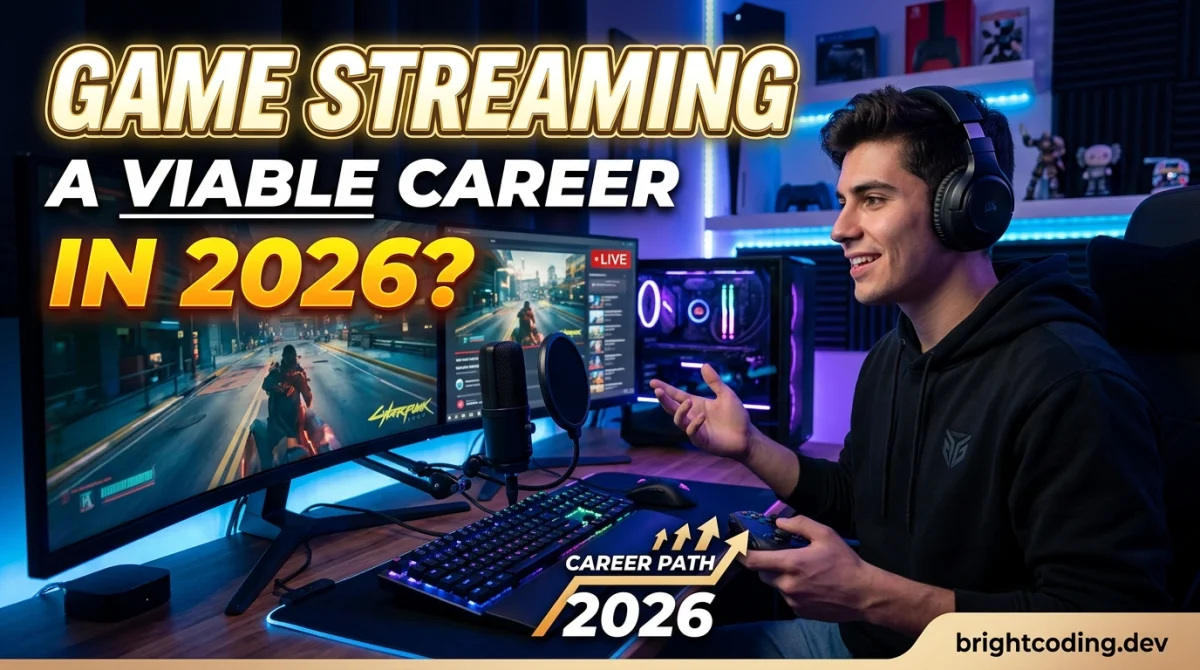
Is Game Streaming a Viable Career in 2026?
You have a decent gaming setup, a handful of loyal friends who say you're entertaining, and a dream that flickers on every time you watch a streamer pull in thousands of viewers. But somewhere between the excitement and the "Go Live" button, a quieter voice asks the real question: Can I actually make a living from this in 2026?
You're not alone. Thousands of aspiring creators are standing at the same crossroads. The good news? Game streaming is still a real career path. The hard truth? It looks nothing like it did five years ago. This article will show you exactly what has changed, why the old playbook no longer works, and what you can do right now to build something sustainable - without burning out or going broke.
The Problem: The Dream vs. The Reality
Game streaming exploded into the mainstream over the last decade. Platforms like Twitch, YouTube, and Kick turned bedroom gamers into household names. But by 2026, the landscape has shifted dramatically.
Here's what is actually happening:
- Oversaturation is real. Millions of channels are active across streaming platforms. The barrier to entry is virtually zero, which means everyone is trying.
- The "overnight success" narrative is misleading. For every creator who blows up in six months, thousands stream consistently for years without breaking minimum wage.
- Platform economics have tightened. Ad revenue splits, subscription models, and discovery algorithms favor established creators. New streamers face an uphill climb for visibility.
- Burnout is epidemic. The pressure to stream daily, stay "on" for hours, and constantly produce content leads many to quit within their first year.
Who is affected? Anyone entering the space with the 2019 mindset - thinking a webcam, a capture card, and a few hours of gameplay are enough. The creators who survive in 2026 are the ones who treat streaming as a business, not a hobby that pays.
The most common mistake? Chasing trends instead of building a brand. Jumping from viral game to viral game might spike your numbers temporarily, but it trains your audience to leave the moment the hype dies.
Why It Happens: Three Forces Reshaping Streaming in 2026
Understanding why the game has changed is the first step toward adapting.
1. The Algorithm Has Grown Smarter - and Stricter
Platforms now prioritize watch time, engagement consistency, and content diversity over raw viewer counts. A streamer with 200 highly engaged viewers can earn more algorithmic favor than one with 2,000 passive ones. This rewards creators who build communities, not just audiences.
2. Short-Form Content Is the New Front Door
In 2026, discovery happens on TikTok, YouTube Shorts, and Instagram Reels first. Your live stream is no longer the starting point - it's the destination. Creators who master short-form clips, highlights, and personality-driven content funnel viewers into their live streams. Those who ignore this layer struggle to grow.
3. The Economics of Attention Have Shifted
Viewers have more entertainment options than ever. Streaming is competing with AI-generated content, interactive media, and an endless feed of polished videos. Raw gameplay alone rarely holds attention anymore. Viewers want personality, education, community, or a combination of all three.
The Solutions: Four Realistic Paths to a Streaming Income
There is no single "right way" to make game streaming work. Here are four proven approaches, each with its own trade-offs.
Path 1: The Full-Time Live Streamer
What it is: Treating live streaming as your primary job, broadcasting 20-40 hours per week on platforms like Twitch, YouTube, or Kick.
How it works: Revenue comes from subscriptions, donations, ad revenue, and sponsorships. Growth depends on consistency, niche selection, and community building.
Advantages:
- Direct fan relationships and recurring income through subs.
- Full creative control over your content and schedule.
- Potential for high earnings at scale.
Disadvantages:
- Highly unstable income, especially in the first 1-2 years.
- Demanding schedule that can lead to social isolation and burnout.
- Platform dependency - policy changes can slash your income overnight.
When it makes sense: You have 6-12 months of savings, strong on-camera presence, and a clear niche or personality angle that differentiates you.
Potential costs: $1,500 - $5,000 for a starter setup (PC, microphone, camera, lighting, streaming software). Ongoing costs include internet, games, and platform subscriptions.
Path 2: The Hybrid Creator (Streaming + Content)
What it is: Combining live streaming with pre-recorded content - YouTube guides, TikTok clips, podcast appearances, and social media engagement.
How it works: Short-form and long-form content drives discovery. Live streams monetize the audience you've already built. This diversifies your income across multiple platforms.
Advantages:
- More stable income through diversified revenue streams.
- Better discoverability - you're not relying solely on live stream algorithms.
- Content you create lives forever and continues generating views.
Disadvantages:
- Significantly more work. You're essentially running a small media company.
- Requires skills in video editing, scripting, and social media strategy.
When it makes sense: You enjoy both live interaction and content creation, and you're willing to learn the production side of the business.
Path 3: The Niche Specialist
What it is: Focusing on a specific game, genre, or community - speedrunning, retro gaming, esports analysis, or even educational content like game design breakdowns.
How it works: By dominating a smaller pond, you become the go-to creator for that specific audience. Sponsors and communities in niche spaces often pay a premium for targeted reach.
Advantages:
- Less competition than broad "variety streaming."
- Highly engaged, loyal audience.
- Easier to secure sponsorships from relevant brands.
Disadvantages:
- Smaller total addressable audience.
- Risk if your niche game loses popularity.
- Can feel limiting if your interests evolve.
When it makes sense: You have deep expertise or passion in a specific area and can commit to becoming the definitive voice in that space.
If you're still figuring out which games resonate with you, exploring different genres can help you find your niche. GamingUp's free browser games collection is a great way to sample titles across multiple genres without spending a dime - perfect for testing what kind of content you actually enjoy making.
Path 4: Streaming as a Side Hustle
What it is: Keeping a day job or other primary income while streaming part-time - evenings, weekends, or during seasonal breaks.
How it works: You grow slowly, reinvest earnings into better equipment, and only transition to full-time once your streaming income is stable and predictable.
Advantages:
- Financial security while you build.
- Lower pressure means more authentic, enjoyable content.
- Time to learn and experiment without risking your livelihood.
Disadvantages:
- Slower growth due to limited streaming hours.
- Harder to hit platform partner requirements.
- Balancing two demanding schedules is exhausting.
When it makes sense: You have financial obligations, limited savings, or simply want to test the waters before committing fully.
The Best Choice: Which Path Fits You?
There is no universal answer. The right path depends on your risk tolerance, financial situation, skills, and personality.
| Your Situation | Best Path |
|---|---|
| Savings for 12+ months, strong personality, high risk tolerance | Full-Time Live Streamer |
| Creative, enjoys editing, wants stability | Hybrid Creator |
| Deep expertise in one game or genre | Niche Specialist |
| Employed, cautious, testing the waters | Side Hustle |
Most successful streamers in 2026 are actually hybrid creators. They treat their brand as a content business, not a live broadcast. If you can only pick one model to study, start there.
Step-by-Step Action Plan: Your First 90 Days
If you're serious about making game streaming work, here's a practical roadmap.
Week 1-2: Foundation
- Choose your primary platform (Twitch, YouTube, or Kick) based on your content style.
- Pick 2-3 games you genuinely enjoy - not just what's trending.
- Set up basic streaming equipment. You don't need top-tier gear on day one.
- Create consistent branding: username, profile image, and basic overlay.
Week 3-4: Content Systems
- Stream on a fixed schedule - consistency beats frequency.
- Start clipping your best moments for short-form content.
- Set up a Discord or community space for viewers to gather between streams.
- Begin posting 3-5 short clips per week on TikTok, YouTube Shorts, or Instagram Reels.
Month 2: Growth & Engagement
- Network with other small streamers in your niche. Co-streaming and raids build communities.
- Analyze your analytics. Which games, times, and content types perform best?
- Engage with your community off-stream. Reply to comments, visit other channels, be visible.
- Consider upgrading your setup with earnings or savings. Better audio is usually the highest-impact upgrade.
Month 3: Monetization & Sustainability
- Apply for platform monetization programs once you hit requirements.
- Explore affiliate links for games, hardware, and peripherals.
- Evaluate your mental health and burnout levels. Adjust your schedule if needed.
- Set a 6-month income goal and a clear decision point: continue, pivot, or pause.
To sharpen your skills while building your audience, check out GamingUp's free gaming tools - including aim trainers and calculators that can help you improve your gameplay and create more compelling content for viewers who want to learn.
Common Mistakes to Avoid
- Streaming for 8 hours with zero viewers. Long streams with no engagement hurt your metrics. Start with 2-3 focused hours and build up.
- Ignoring short-form content. In 2026, clips are your billboard. Without them, you're invisible to new audiences.
- Copying top streamers. What works for a creator with 50,000 viewers rarely works for someone with 50. Find your own voice.
- Neglecting your health. Eye strain, poor posture, and social isolation are real occupational hazards. Treat your body like your equipment - maintain it.
- Quitting your job too early. The romanticized "I quit my job to stream full-time" story often ends in financial stress and rushed, low-quality content.
- Focusing only on gameplay. Viewers return for you. If they wanted silent gameplay, they'd watch a YouTube walkthrough.
- Chasing every platform at once. Master one platform before expanding. Spreading yourself thin dilutes your growth.
If you're brand new to gaming culture itself, GamingUp's beginner tips guide covers foundational skills that will make you a more confident player - and a more credible streamer - from day one.
Expert Takeaway
Game streaming is absolutely a viable career in 2026 - but viability and accessibility are not the same thing. The creators who succeed are not necessarily the most talented gamers. They are the most disciplined business owners. They understand their audience, diversify their income, protect their mental health, and treat content creation as a craft to be refined over years, not months.
The question is no longer Can you make money streaming games? The question is: Are you willing to build a business around your passion? If the answer is yes, the opportunity is real. If the answer is "I just want to play games and get paid," the market has already moved on.
FAQ
How much money do small streamers make in 2026?
Most streamers with under 1,000 concurrent viewers earn between $0 and $500 per month. Income typically becomes sustainable only after crossing partner thresholds and building multiple revenue streams. Treat the first year as an investment, not a paycheck.
What equipment do I need to start streaming games?
At minimum: a reliable PC or console, a stable internet connection (5+ Mbps upload), a decent USB microphone, and free software like OBS Studio. A webcam helps but isn't mandatory. You can upgrade lighting, cameras, and audio as you grow.
Is it too late to start streaming in 2026?
It's not too late - but the bar is higher. Success now requires more than just gameplay. You need personality, consistency, short-form content skills, and community-building. New creators break through every month, but they do so with strategy, not luck.
Should I stream on Twitch, YouTube, or Kick?
Twitch has the largest live audience but the fiercest competition. YouTube offers better discoverability through its search and recommendation engine. Kick has lower competition and favorable revenue splits but a smaller total audience. Many successful creators multistream or use one platform for discovery and another for monetization.
How long does it take to make streaming a full-time career?
For most creators, 2-4 years of consistent effort is realistic. The first 6-12 months are typically unprofitable. The creators who reach full-time status faster usually bring existing skills - video editing, social media marketing, or a pre-built audience from another platform.
Ready to play?
Puzzle, arcade, 3D, word & sports games for every age — instant play, no registration.
Comments
No comments yet. Be the first to share your thoughts!